The Creamiest White Cheddar Mac and Cheese

7/13/2026
This post may contain affiliate links. Please read our disclosure policy.
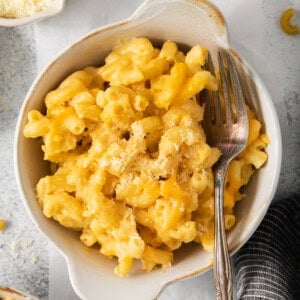
I loved boxed white cheddar Kraft mac and cheese as a kid — the sharp, tangy flavor was always my favorite. This from-scratch white cheddar mac and cheese is what happened when I decided to make my own version with real cheese, and it blows the boxed stuff out of the water. Three full cups of sharp white cheddar melt into a velvety roux-based sauce that coats every single pasta shell in the richest, creamiest cheese you’ve ever tasted. With only 8 ingredients and 30 minutes on the stovetop, this is the ultimate weeknight comfort food.
Recipe Summary
This stovetop white cheddar mac and cheese is ultra creamy, ridiculously cheesy, and ready in just 30 minutes. A simple roux-based sauce made with 3 full cups of sharp white cheddar cheese coats every pasta shell in rich, velvety goodness. With only 8 pantry-friendly ingredients, it’s the easiest way to upgrade your weeknight comfort food.
⏱️ Total: 30 mins · 🍽️ Yield: 6 servings · 📊 Level: Easy · 🥗 Diet: Vegetarian
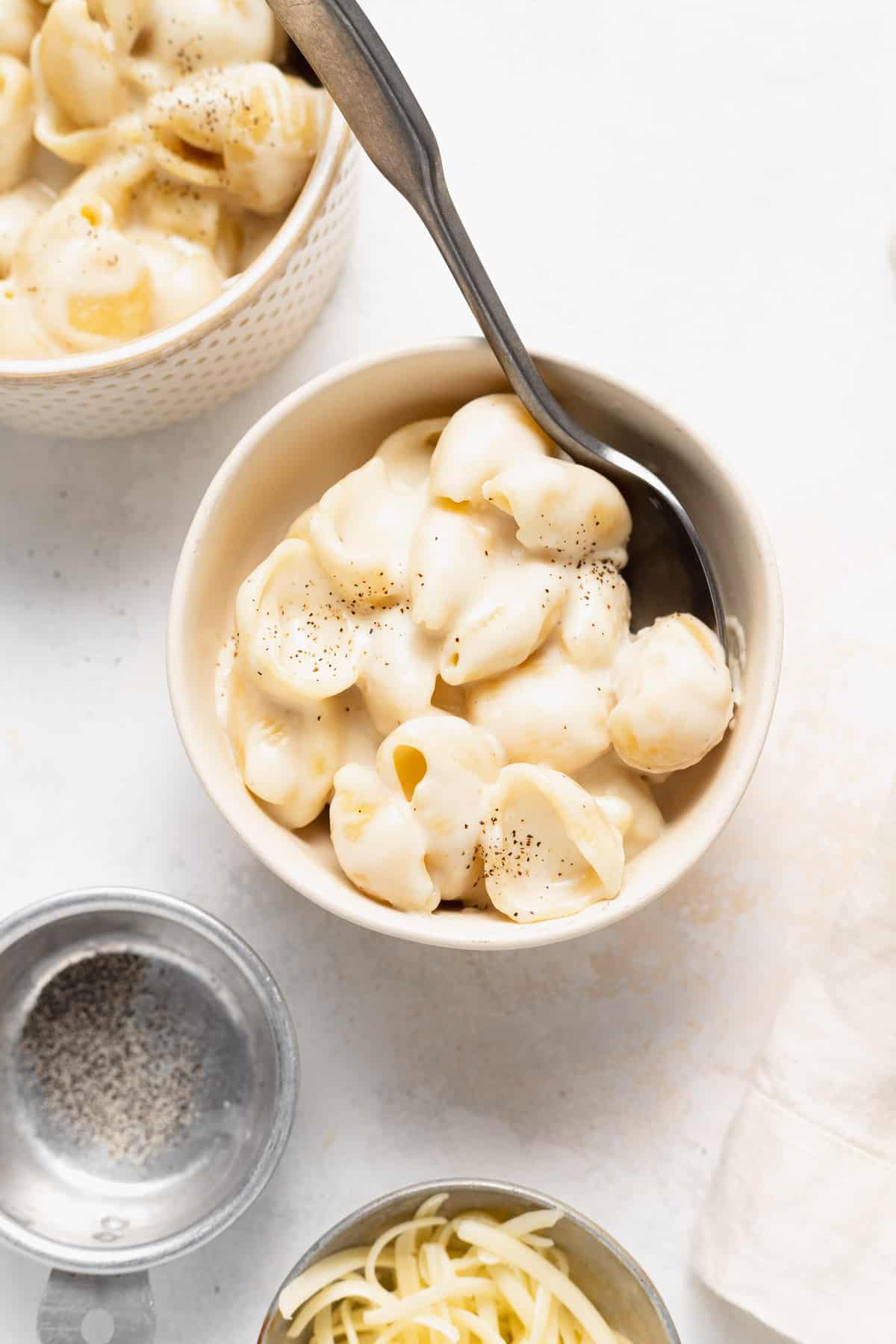
Why I Love This White Cheddar Mac and Cheese
Stovetop start to finish: No baking required — the sauce is at its absolute creamiest straight off the stovetop. No waiting 25 minutes for an oven, no dried-out edges. Just pure, saucy perfection.
3 cups of white cheddar: That’s not a typo. The generous cheese-to-milk ratio (3 cups of each) is what makes this white cheddar mac and cheese recipe creamier than most you’ll find online. I tested this across 6+ batches — any less cheese and you lose the coating; any more and the sauce gets too thick to toss.
8 ingredients, 30 minutes: Everything comes from the pantry. No specialty cheeses, no breadcrumb topping fuss — just pure, cheesy comfort that tastes way more impressive than the effort it takes.
Kid and adult approved: This is one of my most-requested recipes. As reader Emily B. said, it makes amazing leftovers — she warms it up for lunch at work all week.
“Easy cheesy recipe! It made a lot of leftovers and I have been warming it up for lunch at work. Delish!” – Emily B.
What Makes White Cheddar Different
Here’s a fun fact: white cheddar and yellow cheddar are the exact same cheese. The only difference is color. Yellow cheddar gets its orange hue from annatto, a natural seed extract that’s been used as a food coloring for centuries. White cheddar simply skips the coloring. Flavor-wise, they’re identical at the same age — so if you prefer the cleaner, more elegant look of white cheddar mac and cheese, you’re not sacrificing any taste.
What does matter is the age of your cheddar. Sharp or extra-sharp white cheddar has been aged longer, which concentrates the flavor and changes the protein structure so it melts more smoothly into a sauce. Mild cheddar tastes flat in a cheese sauce — it just doesn’t have enough punch to carry the dish. I always reach for sharp white cheddar, and Wisconsin white cheddars are a personal favorite (a nod to my cheese-obsessed roots running an all-purpose white cheddar cheese sauce on this site).
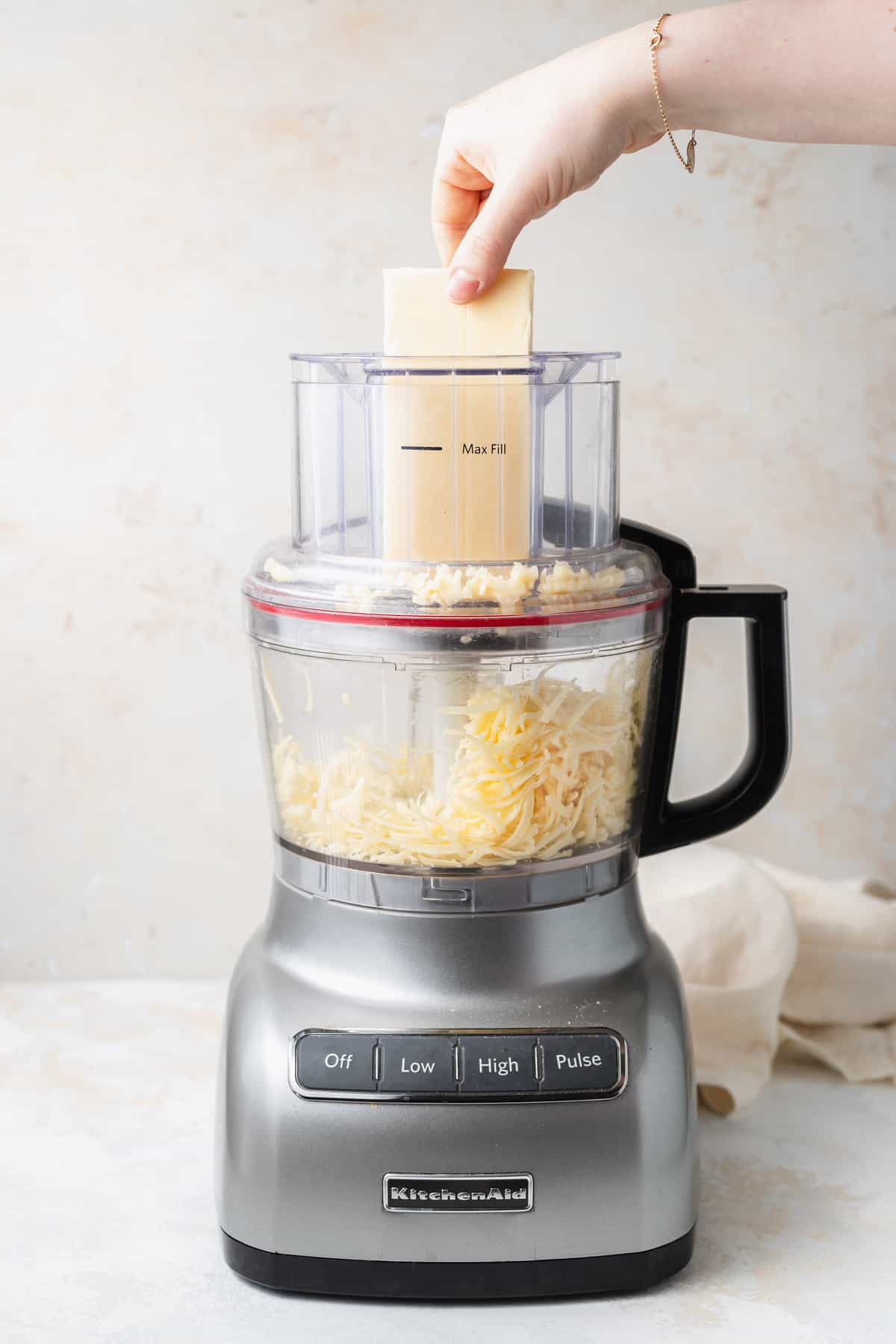
One more thing: always buy a block and grate it yourself. Pre-shredded cheese is coated in potato starch and cellulose to prevent clumping in the bag, but those anti-caking agents prevent smooth melting in a sauce. That’s the #1 cause of gritty mac and cheese.
Ingredients Needed
- Pasta: Medium shells are my go-to — the concave shape traps sauce in every single bite. Elbow macaroni, cavatappi, or any small-to-medium ridged pasta works great too.
- Unsalted butter: The fat base of the roux. No need to bring it to room temperature — it melts right on the stovetop.
- All-purpose flour: Combines with the melted butter to create the roux, which is what thickens the sauce without cornstarch or cream cheese shortcuts.
- 2% milk: Keeps the sauce creamy without being overly heavy. Whole milk makes it even richer if you want to go all-in; just avoid skim (the sauce will be too thin).
- White cheddar cheese: The star of this white cheddar mac and cheese recipe. Always use sharp or extra-sharp, and always freshly grate it from a block for the smoothest melt.
- Salt: Used twice — once to salt the pasta water and again to season the finished sauce. Cheese sauce needs more salt than you’d think.
- Garlic powder: Adds savory depth without the bite of raw garlic. Granulated garlic works interchangeably here.
Tips for the Creamiest Sauce
If your mac and cheese has ever turned out gritty, thin, or just not as creamy as you wanted, these tips will fix that for good.
Grate your own cheese: I mentioned it above, but it’s worth repeating — pre-shredded bags contain potato starch and cellulose that prevent smooth melting. Always use a block and grate it fresh.
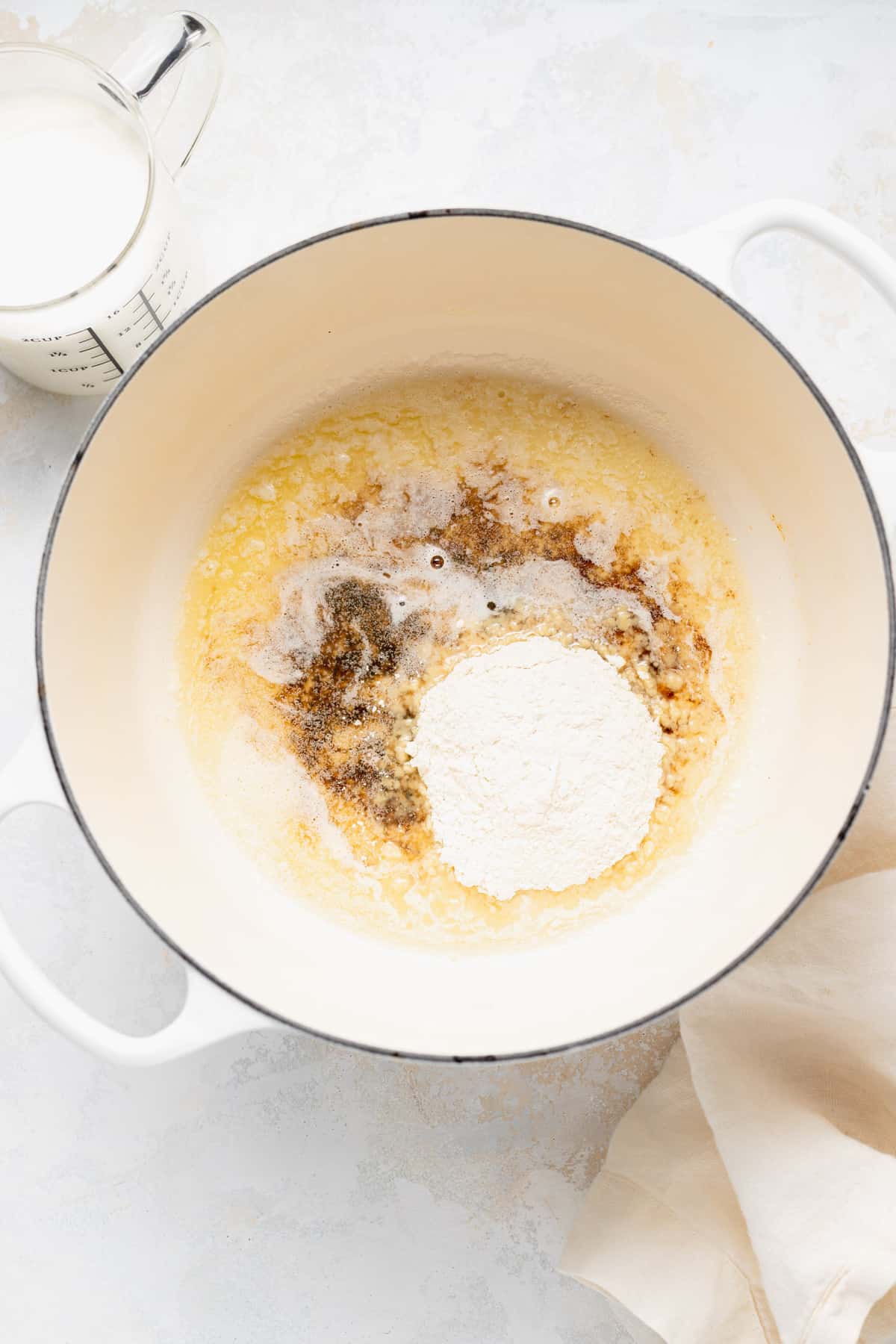
Cook the roux long enough: Whisk the butter and flour together for at least 1–2 minutes before adding milk. Raw flour leaves a pasty aftertaste. You’ll know the roux is ready when it smells slightly nutty.
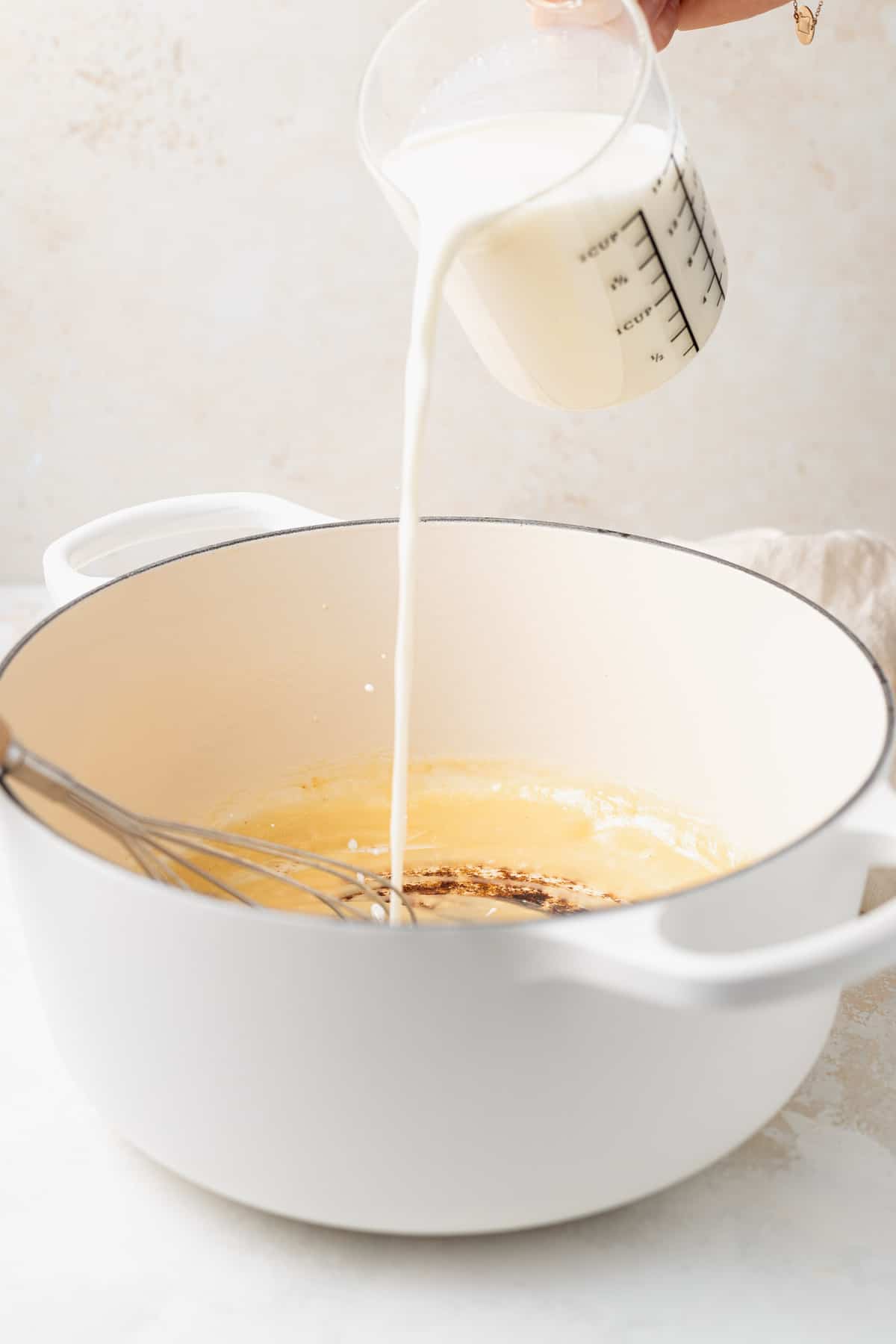
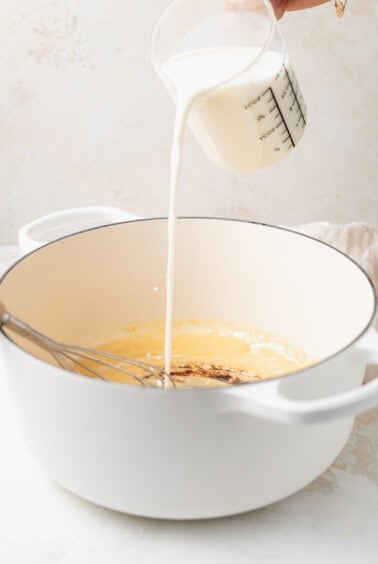
Add milk gradually: Pour the milk in a slow, steady stream while whisking constantly. Dumping it all in at once creates lumps that are hard to whisk out.
Remove from heat before adding cheese: This is the biggest mistake I see. Adding cheese to a pot that’s too hot causes the proteins to seize, which makes the sauce gritty and grainy. I pull my pot completely off the burner before stirring in the cheddar — the residual heat is more than enough to melt 3 cups of cheese perfectly.
Don’t skip the salt: Undersalted cheese sauce tastes flat, not cheesy. Taste and adjust — you’ll almost always need more than you think.
Variations to Try
This white cheddar mac and cheese is perfect as-is, but here are some ways to mix it up:
Add veggies: Fold in steamed broccoli florets, roasted cauliflower, or frozen peas right before serving for extra color and nutrition.
Spice it up: A pinch of crushed red pepper flakes, a splash of hot sauce, or 1/4 teaspoon of chipotle powder adds a smoky kick that pairs beautifully with white cheddar.
Swap the pasta shape: Medium shells, cavatappi, rotini, or classic elbow macaroni all work. Look for shapes with ridges or holes that grip the sauce.
Add protein: Fold in shredded rotisserie chicken, crumbled bacon, or diced ham for a heartier meal.
Make it baked: Transfer to a greased 9×13 dish, top with extra cheese or breadcrumbs, and bake at 375°F for 20–25 minutes until golden and bubbly. Note: this changes the texture — stovetop is creamier, baked gives you a crispy top.
Blend the cheeses: Mix in 1/2 cup of Gruyère or Pecorino Romano alongside the white cheddar for a more complex, nutty depth of flavor.
Serving Ideas
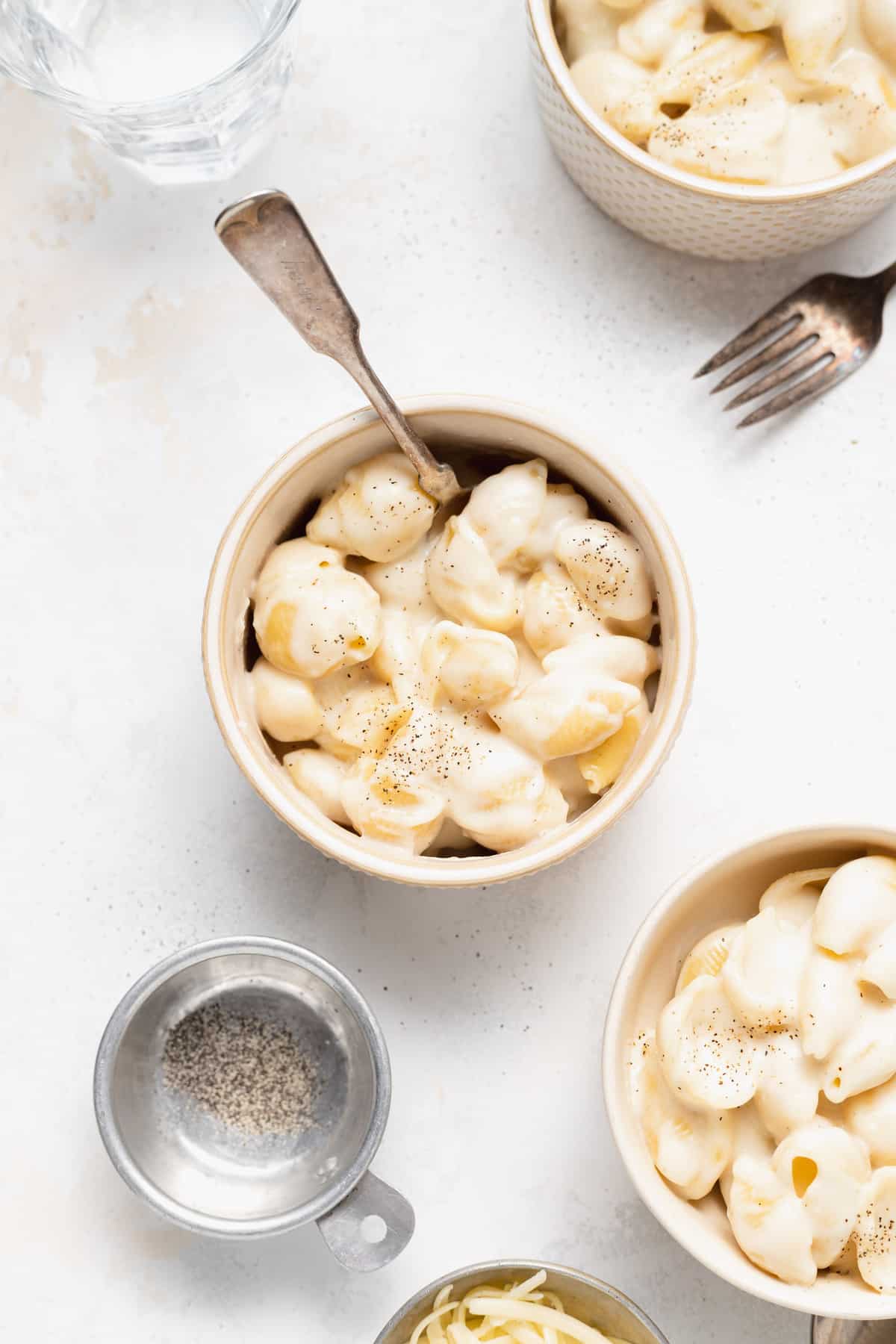
This white cheddar mac and cheese works as a standalone main or a cozy side dish. My favorite pairings: a crisp caesar salad, warm cheesy garlic bread, focaccia muffins, grilled chicken, baked salmon, or roasted broccoli on the side.
Storage & Reheating Tips
- Store: Transfer leftovers to an airtight container and refrigerate for up to 3 days.
- Reheat: Place leftovers in a pot on the stovetop over medium heat. Add a splash of milk and stir until warm throughout — the milk revives the sauce’s creaminess.
- Don’t freeze: The dairy-based sauce breaks down when frozen and thawed. It won’t reheat well, so I recommend enjoying this one fresh or as fridge leftovers only.
- Leftover hack: Add a splash of milk plus an extra handful of shredded white cheddar when reheating. It brings the sauce back to a just-made texture that’s almost as good as the original.
FAQ
Sharp white cheddar is the best cheese for white cheddar mac and cheese. The aging process gives it a bolder flavor and smoother melt compared to mild cheddar. I always buy a block and grate it myself — pre-shredded cheese has anti-caking agents that can make the sauce gritty.
The only difference is color. Yellow cheddar gets its orange hue from annatto, a natural seed extract. White cheddar skips the coloring. Flavor-wise, they’re identical at the same age — so if you prefer the look of white, go for it. I use white cheddar because it gives the mac and cheese a cleaner, more elegant appearance.
Yes! Use a 1:1 gluten-free flour substitute for the roux and swap in your favorite gluten-free pasta. The cheese sauce works exactly the same way. Or try my cauliflower mac and cheese for a noodle-free option that’s still super cheesy.
Gritty sauce usually means the cheese was added over too-high heat, or you used pre-shredded cheese. Always remove the pot from the burner before stirring in the cheddar, and use freshly grated cheese from a block. If the sauce does turn gritty, try blending it with an immersion blender — it can sometimes save it.
I don’t recommend freezing this stovetop mac and cheese. The dairy-based sauce doesn’t hold up well after freezing and thawing — it can separate and turn grainy. It’s best enjoyed fresh or stored in the fridge for up to 3 days.
The cheese sauce can be made up to 2 days ahead and stored in the fridge. When you’re ready to serve, gently reheat the sauce on the stovetop with a splash of milk, stirring constantly, then toss with freshly cooked pasta. I don’t recommend mixing the pasta and sauce in advance — the noodles absorb the sauce as they sit.
White Cheddar Mac and Cheese
Ingredients
- 1 lb. small or medium pasta shells
- 1/2 teaspoon kosher salt
- 4 tablespoons unsalted butter
- 1/3 cup all-purpose flour
- 3 cups 2% milk
- 3 cups shredded white cheddar cheese*
- 1/2 teaspoon salt
- 1/4 teaspoon granulated garlic, or garlic powder
Instructions
- Bring a large pot of water to a boil. Add the uncooked shells and kosher salt to the water and stir.
- Cook the pasta until al dente according to package instructions.
- Strain the noodles and set aside.
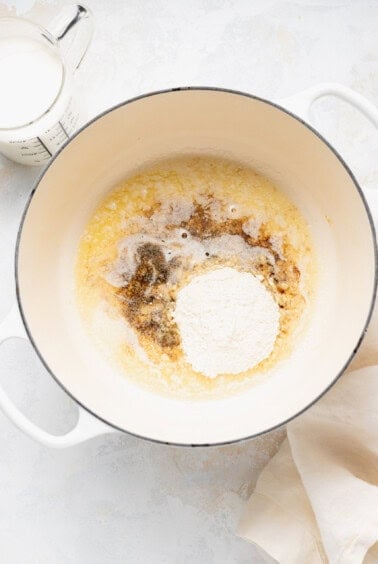
- While the pasta cooks, prepare a roux. Melt the butter in a large pot or Dutch oven over medium/high heat.
- Add the flour and whisk until the butter and flour form a crumble.

- Slowly add the milk to the pot, whisking constantly. Continue to whisk the roux over medium/high heat until the roux thickens, about 4-6 minutes.
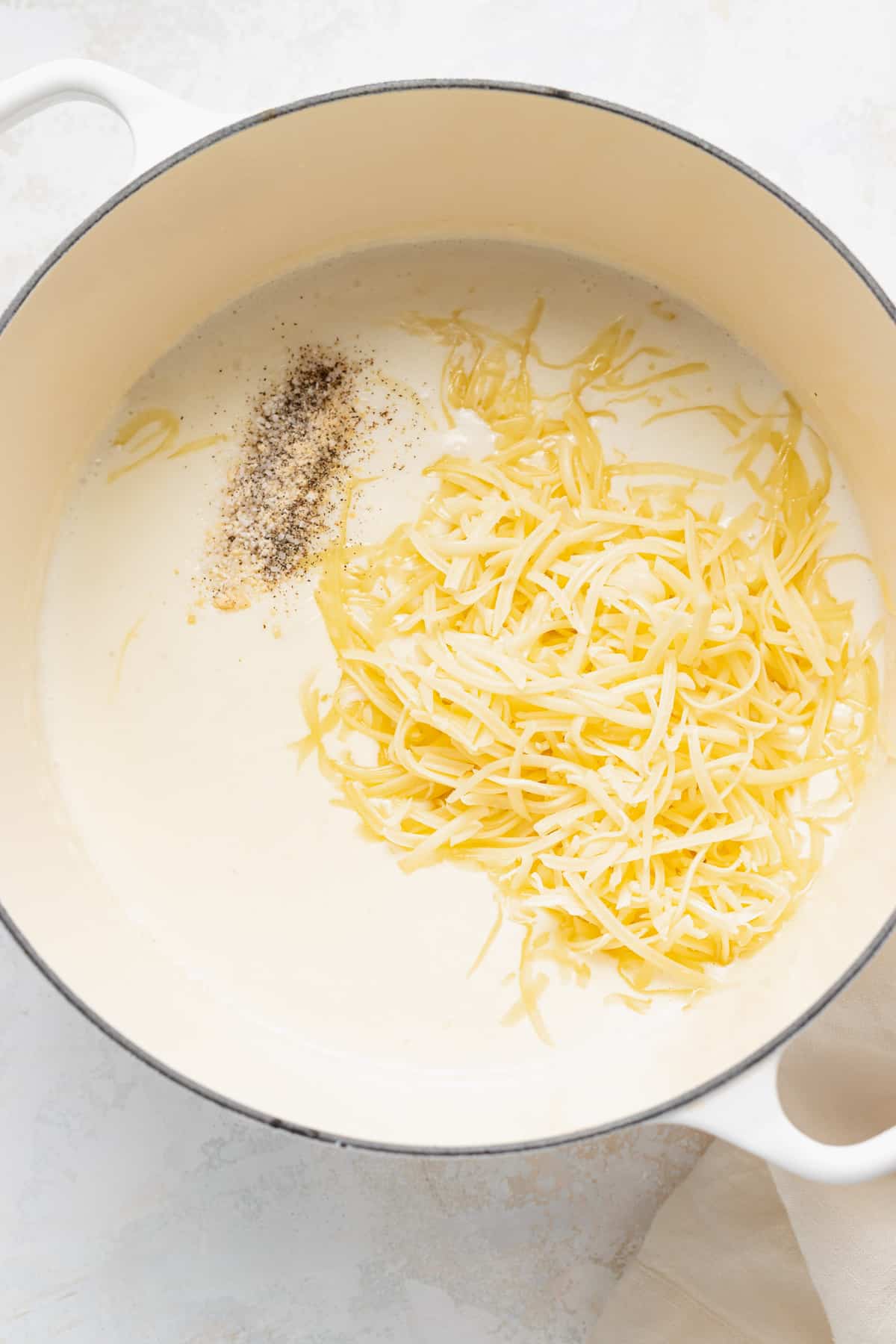
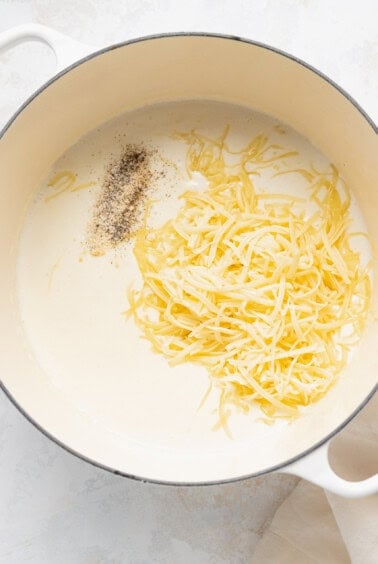
- When the roux is thick, remove the pot from the heat and add the cheddar cheese. Whisk until the cheese has melted.
- Add the granulated garlic, salt, and pepper to the cheese sauce and stir to combine.
- Add the cooked pasta shells to the cheese sauce and mix until the noodles are evenly covered in the sauce. Enjoy immediately!
Tips & Notes
- Storing leftovers: Transfer to an airtight container and refrigerate for up to 3 days. To reheat, place leftovers in a pot on the stovetop over medium heat. Add a splash of milk and stir until warm throughout. Do not freeze — the dairy-based sauce doesn’t hold up well after thawing.
- Cheese: Always use freshly grated white cheddar from a block. Pre-shredded cheese has anti-caking agents that can make the sauce gritty. If you don’t have a grater, here’s how to grate cheese without one!
- Leftover hack: Add a splash of milk plus an extra handful of shredded white cheddar when reheating for a just-made texture.
Watch It
Nutrition
Nutrition information is automatically calculated, so should only be used as an approximation.
Don’t forget to tag your posts on social media with the hashtag #cheeseknees, we’d love to see what you’re up to!
Related Recipes








it was kind of mid. we made it twice with shell pasta and each time it got grainy and tasted weird. might be just our cooking skills though
Shoot! We hate to hear that — mind sharing if you made any modifications?
Easy cheesy recipe! It made a lot of leftovers and I have been warming it up for lunch at work. Delish!
Happy to hear it!
I love Mac and Cheese. This would work with gluten free noodles too. It’s on my list of things to make!
Yes, gluten free noodles should work just fine!!