How to Soften Cream Cheese (4 Quick Methods)

7/7/2026
This post may contain affiliate links. Please read our disclosure policy.
Wondering how to soften cream cheese? Whether you forgot to pull it from the fridge or you’re in a time crunch, I’ll walk you through 4 different ways to soften cream cheese quickly — including my go-to method (the easiest one!). The next time a recipe calls for room temperature cream cheese, you’ll know exactly what to do and which method to use based on how much time you have.
Methods for Softening Cream Cheese
Have you ever read a recipe only to realize it calls for softened cream cheese instead of chilled? I’ve been there so many times and it can be frustrating, especially when in a time crunch. I’ll walk you through 4 tried-and-true methods for softening cream cheese quickly, including:
- The countertop (my preferred method)
- A bowl of warm water
- Your hands
- A microwave
Best Cream Cheese to Use
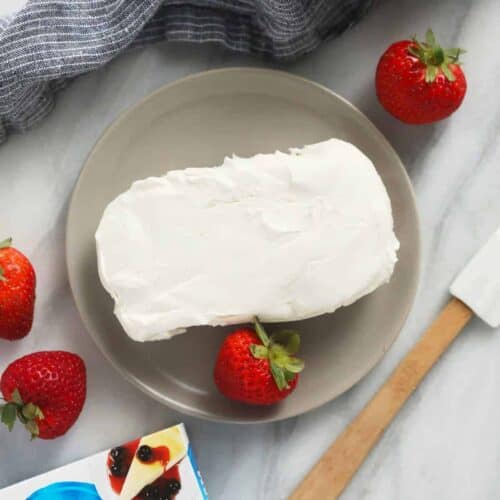
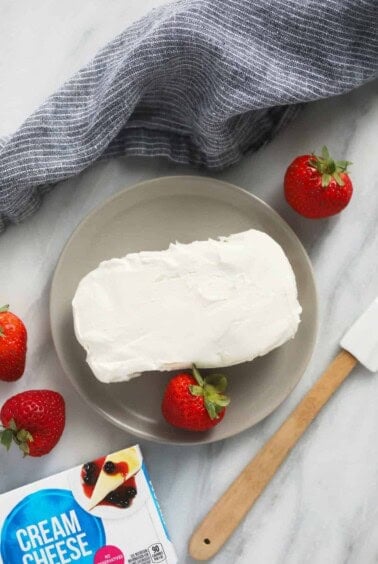
Typically, cream cheese comes in 2 forms — in a brick (shown in these photos) or in a tub. I recommend using full-fat brick-style cream cheese for baking and cooking because:
- It’s easier to measure: Most packaged brick-style cream cheeses have a measuring tool right on the packaging which makes it super easy to use.
- It softens faster: A big win!
- It holds its shape: Tub-style cream cheese is whipped and already soft, which makes it harder to measure accurately and can throw off the texture in baked goods like cheesecake.
How to Tell When Cream Cheese Is Softened
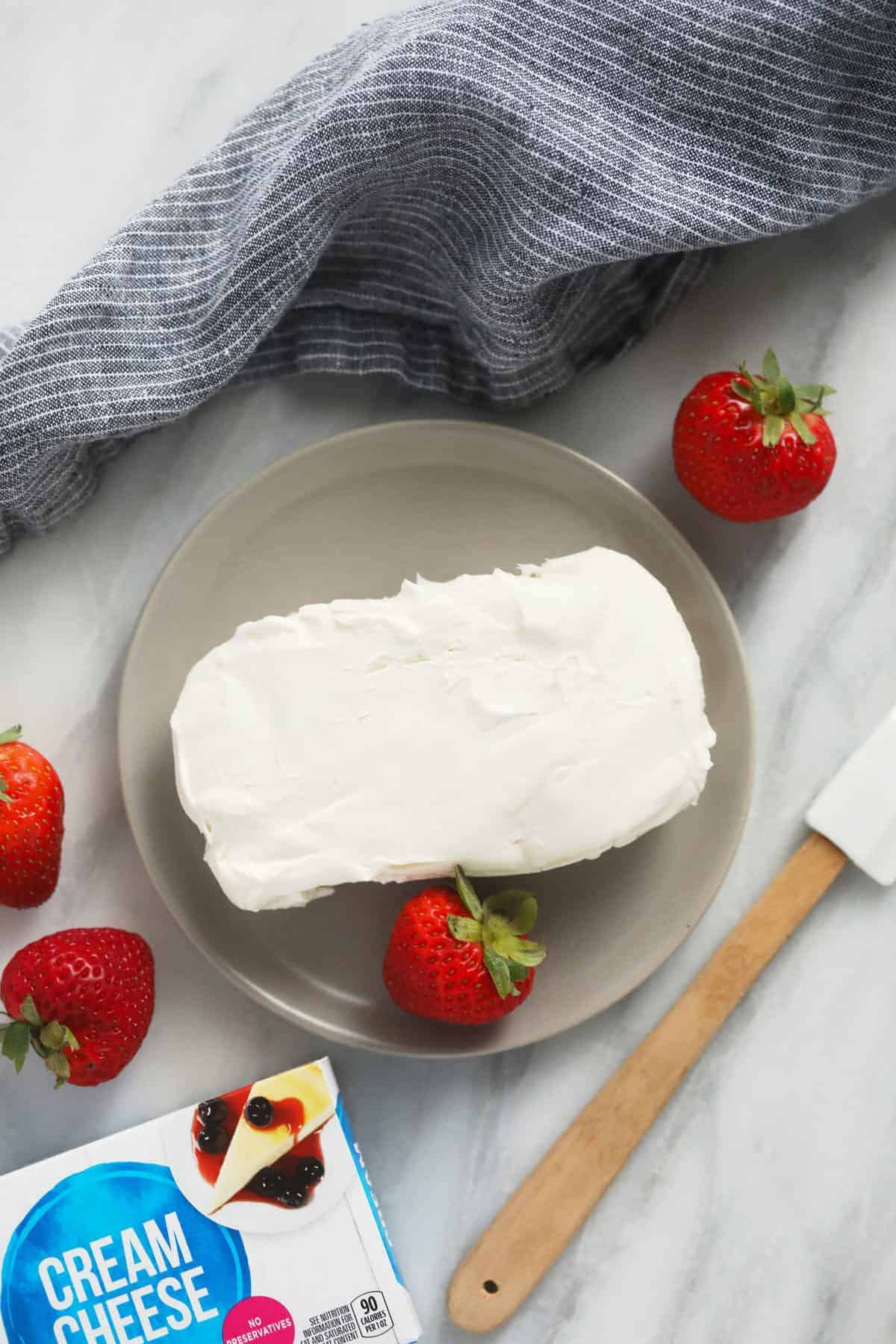
Properly softened cream cheese should be around 60–65°F (15–18°C). Here’s the quick press test: gently press the surface with a finger or the back of a spoon. It should yield easily and leave a slight indent, but not feel squishy, slimy, or melted.
If your finger pushes straight through or the cream cheese looks shiny and runny, it’s over-softened. Pop it back in the fridge for 5–10 minutes to firm up before using it.
Why does it matter? Softened cream cheese blends smoothly into batters and frostings, eliminating lumps. Cold cream cheese creates visible streaks and grainy texture — especially noticeable in cream cheese buttercream and no-bake cheesecake pies.
Featured Comment
“So nice to have other options if your in a time crunch. I never thought of putting my cream cheese in a bowl of warm water 🤯”
-Sadie G.
How to Soften Cream Cheese Quickly
Method 1: Countertop
Total time: 30 minutes to 1 hour (or 15–20 minutes with the cubing trick)
Probably the most common, classic method. Simply remove the cream cheese from the refrigerator, unwrap it, and place it on the countertop to soften. This will take anywhere from 30 minutes to 1 hour.
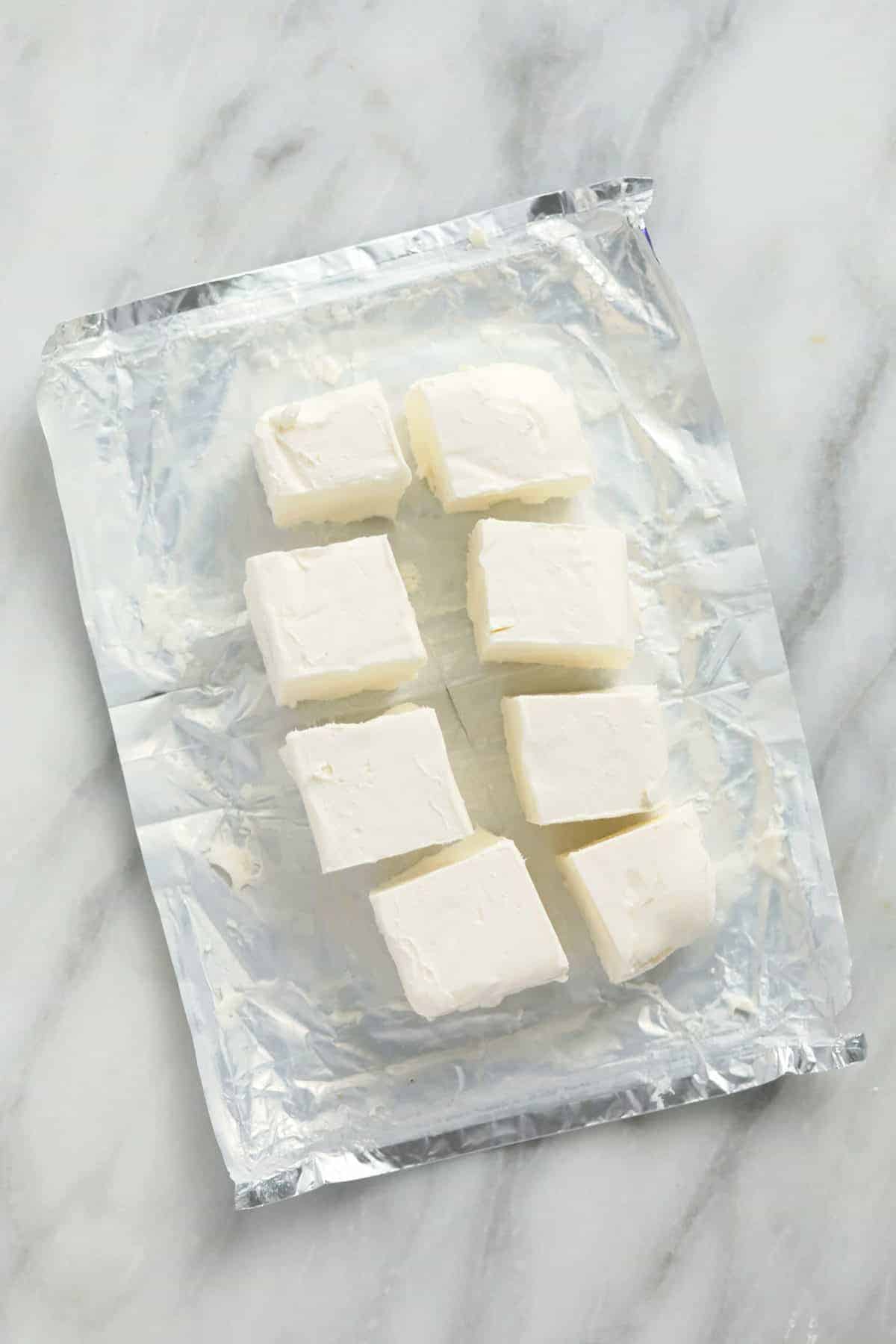
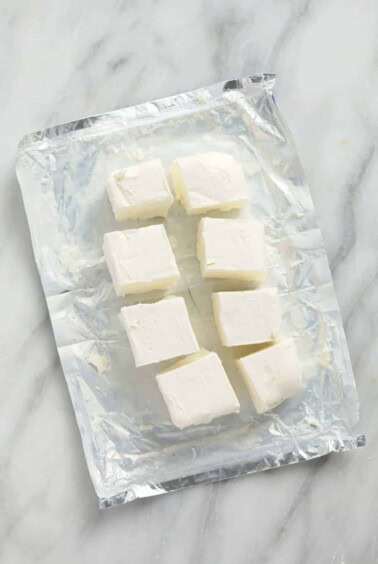
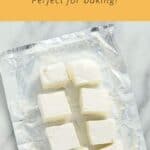
Speed hack: Cut the block into 1-ounce cubes and space them about half an inch apart on an aluminum baking sheet. Aluminum conducts heat incredibly well, so the cubes warm evenly and reach the perfect temperature in just 15–20 minutes — roughly half the time of a whole block. This is my all-time favorite method because it’s hands-off and gives the most consistent results.
Method 2: Warm Water
Total time: 5 to 10 minutes
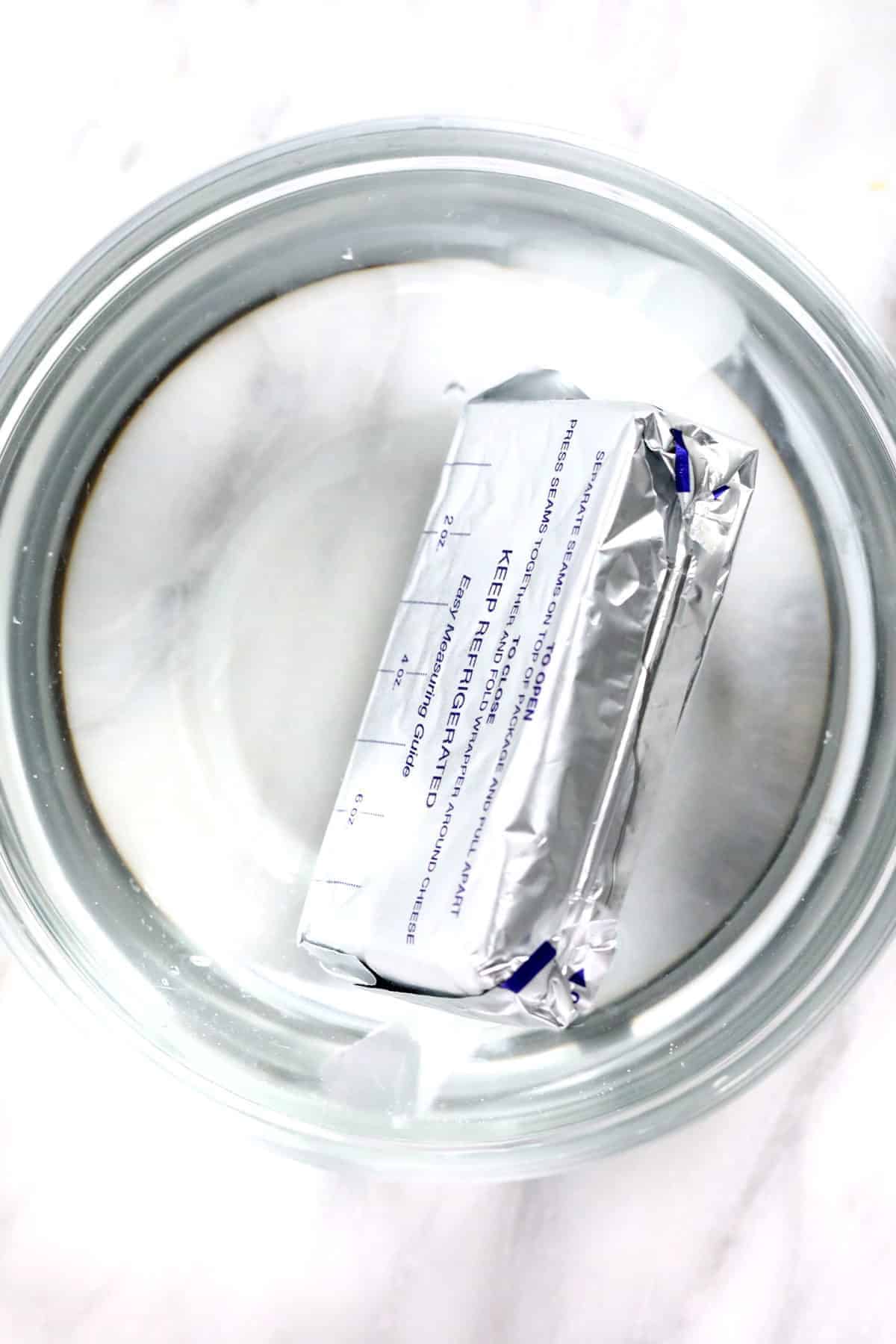
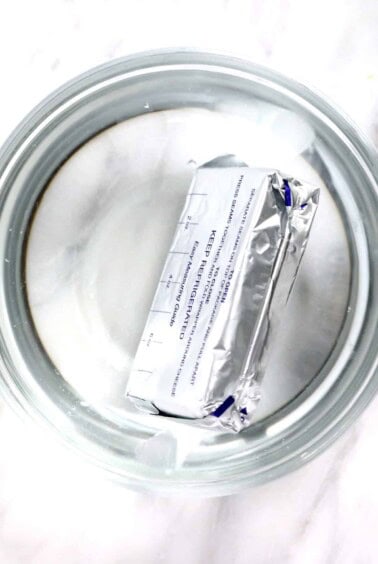
Fill a large bowl with warm water (not boiling, but warm/hot). Place the packaged cream cheese into the water and let the magic happen. (Make sure you’re using a sealed brick of cream cheese so water doesn’t seep into the package and onto the cheese.) Remove the cream cheese from the water when it’s appropriately softened (anywhere from 5–10 minutes) and continue with your recipe.
Tip: Use a bigger bowl to soften more bricks of cream cheese at once. Flip the block halfway through for the most even results.
Method 3: Your Hands
Total time: 10 to 15 minutes
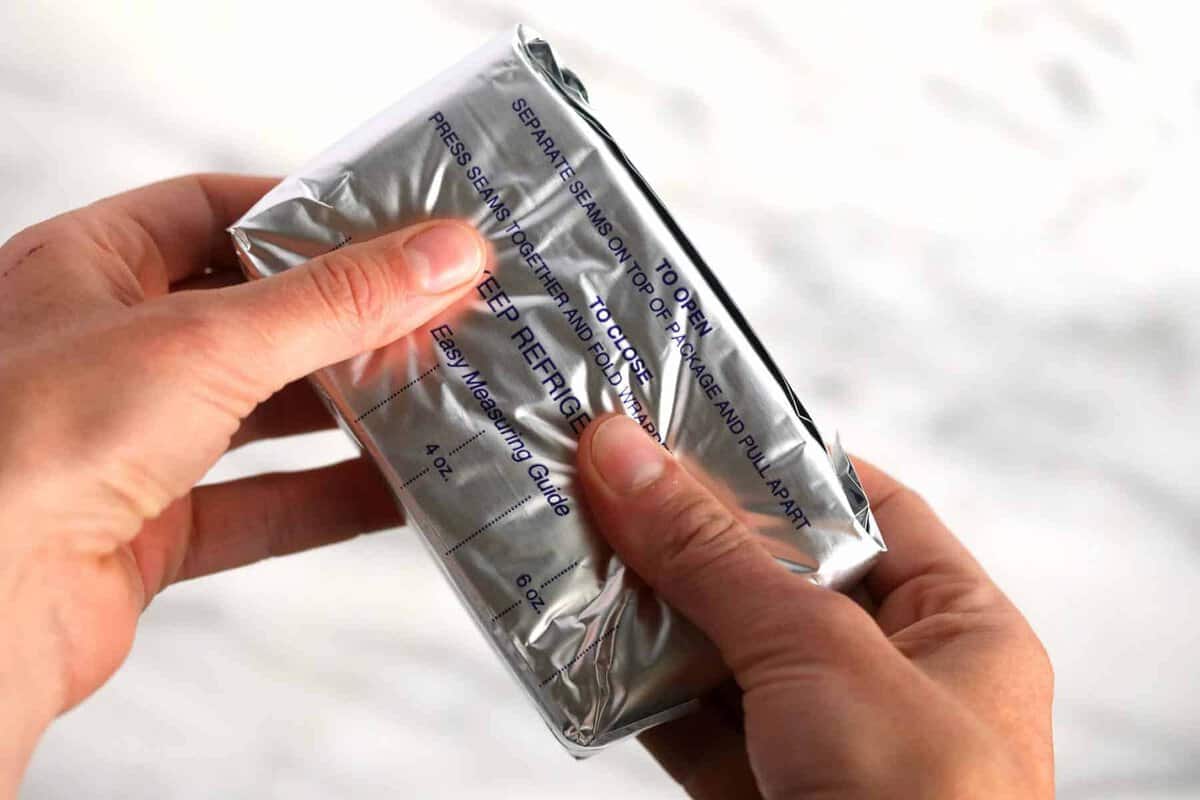
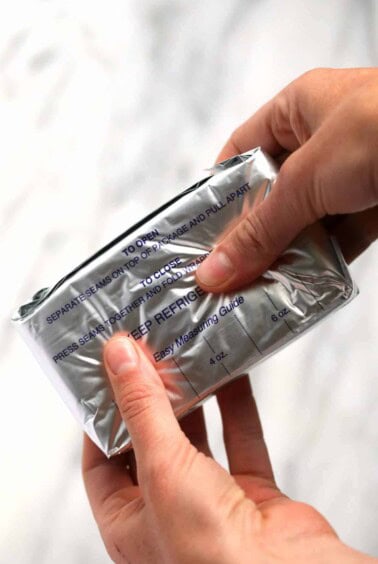
Keep the cream cheese wrapped in its packaging and place it in your palms. Use your hands to gently massage the block of cream cheese for 10–15 minutes, or until softened.
Tip: To speed up the process, run your hands under warm water, then massage the cream cheese.
Method 4: Microwave
Total time: 15–30 seconds
While easily the fastest method, using the microwave is also the most risky. Remove the packaging and place the cream cheese onto a microwave-safe plate. Microwave it on high in increments of 10–15 seconds, until soft. Keep an eye on the cream cheese to avoid cooking it!
Tip: Microwave power levels vary, so always start with 10 seconds and check. The edges warm faster than the center, so if the outside looks soft but the middle is still firm, let it sit for 30 seconds before microwaving again. Cutting the block into cubes first helps the microwave method work more evenly.
Food Safety Tip
Cream cheese is perishable! The FDA recommends leaving dairy products at room temperature for no longer than 2 hours. Once softened, use it promptly and refrigerate any leftovers. Don’t leave cream cheese out overnight to soften — even if it seems easier, it can become a breeding ground for bacteria.
Ways to Use Softened Cream Cheese
Many baking and cooking recipes call for softened cream cheese. Use it in:
Frosting including classic cream cheese frosting, lemon cream cheese frosting, strawberry cream cheese frosting, chocolate cream cheese frosting, and cream cheese buttercream.
Breads and muffins like cream cheese banana bread, blueberry cream cheese muffins, pumpkin cream cheese bread, and pumpkin spice latte loaf.
Bars and brownies including cream cheese brownies, lemon cream cheese bars, slutty cheesecake bars, and cream cheese pumpkin brownies.
No-bake desserts like key lime pie, strawberry tiramisu, cream cheese lemonade pie, and chocolate cream cheese fruit dip.
Breakfast recipes including cream cheese stuffed waffles, apple cream cheese coffee cake, cream cheese pancakes, and strawberries and cream stuffed French toast.
Savory recipes like cream cheese alfredo sauce, cream cheese chicken, and cream cheese fruit dip.
FAQ
It’s totally personal preference, but my go-to method for softening cream cheese is to cut the block into cubes and let them sit on an aluminum baking sheet at room temperature. This method results in evenly softened cream cheese in about 15–20 minutes and is totally hands-off.
Softened cream cheese incorporates much more easily into recipes. The texture combines well with other ingredients and eliminates any lumps when mixed together, especially important when baking cheesecakes, frostings, and cream cheese dips.
It depends on the method: on the countertop (whole block), 30–60 minutes; cubed on an aluminum baking sheet, 15–20 minutes; in a warm water bath, 5–10 minutes; by hand, 10–15 minutes; in the microwave, 15–30 seconds.
No. Cream cheese is perishable, and the FDA recommends leaving dairy products at room temperature for no longer than 2 hours. Leaving it out overnight can allow harmful bacteria to grow. Use one of the quick methods above instead.
If your cream cheese is too soft or melty, pop it back in the refrigerator for 5–10 minutes until it firms up slightly. It should feel cool and pliable but not runny. Over-softened cream cheese can make frostings too loose and cheesecake batters too thin.
Properly softened cream cheese is around 60–65°F (15–18°C). It should yield when pressed with a finger, leaving a slight indent, but shouldn’t be mushy or melted. If you have an instant-read thermometer, check the center of the block.
How to Soften Cream Cheese (4 Easy Methods)
Ingredients
- 8 oz. cream cheese, brick-style
Instructions
Method #1: Countertop
- Remove the packaging from the chilled cream cheese. Place the cream cheese on a plate.
- Cut the cream cheese into chunks (for faster results) or keep it whole. Let it sit at room temperature for 30-60 minutes until softened to the desired texture.

Method #2: Warm Water
- Fill a large bowl with warm water.
- With the sealed packaging still intact, submerge the packaged cream cheese in the bowl of water.
- Let the cream cheese sit in the warm water for 5-10 minutes, or until softened to the desired texture.
Method #3: Your Hands
- Keep the chilled cream cheese in its packaging.
- Use your hands to gently massage the block of cream cheese for 10-15 minutes, or until softened. To speed up the process, run your hands under warm water, then massage the cream cheese.
Method #4: Microwave
- Remove the packaging from the chilled cream cheese. Place the cream cheese on a microwave-safe plate.
- Microwave the cream cheese on high in increments of 10-15 seconds. It should take about 60-90 seconds (keep an eye on the cream cheese so it doesn't get too hot or melt).
Nutrition
Nutrition information is automatically calculated, so should only be used as an approximation.
Don’t forget to tag your posts on social media with the hashtag #cheeseknees, we’d love to see what you’re up to!
Related Recipes














There’s nothing worse than starting a recipe and realizing you have to delay because you didn’t soften your cream cheese. These methods seem obvious but I had never thought of them!!
So nice to have other options if your in a time crunch. I never thought of putting my cream cheese in a bowl of warm water 🤯