Cheese Sauce for Mac and Cheese (Thick, Creamy & Never Grainy)

8/12/2026
This post may contain affiliate links. Please read our disclosure policy.
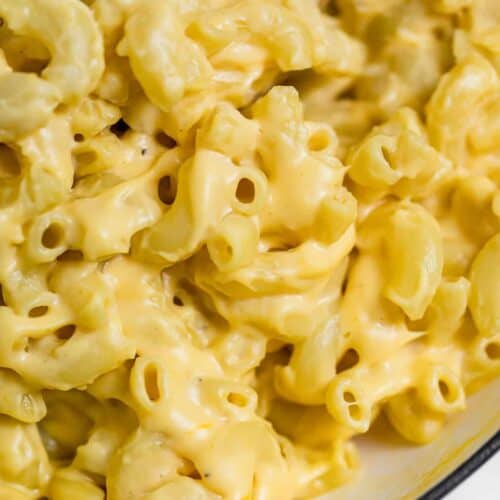
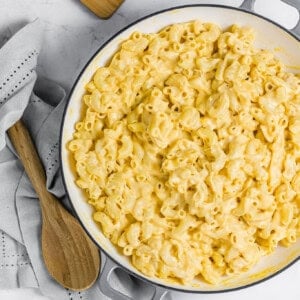
This cheese sauce for mac and cheese is thick, glossy, and clings to every noodle instead of pooling into a watery puddle at the bottom of the bowl. It’s the same mac and cheese sauce recipe that goes into stovetop mac and cheese, gets baked into baked mac and cheese, and gets drizzled over nachos. It comes together with just seven pantry ingredients and takes about 20 minutes from start to finish.
The formula is simple: a butter-and-flour roux gets whisked with milk, then loaded with freshly shredded sharp cheddar and a small splash of vinegar-forward hot sauce that deepens the cheesy flavor without adding heat. This recipe has been tested and refined over the years based on reader feedback, including a recent update to nail down the smoothest, creamiest texture possible.
Recipe Summary: This cheese sauce for mac and cheese is thick, ultra-creamy, and made with just 7 pantry ingredients in about 20 minutes. A simple butter-and-flour roux gets whisked with milk, then loaded with sharp cheddar cheese and a splash of hot sauce that deepens the cheesy flavor without adding heat. Pour it over any noodle for the creamiest homemade mac and cheese you’ve ever made.
⏱️ Total: 20 min · 🍽️ Yield: 8 servings · 📊 Level: Easy · 🥗 Diet: Vegetarian
Why You’ll Love This Cheese Sauce
- Clings to every noodle: The measured butter-flour-milk ratio gives this cheese sauce for mac and cheese enough body to coat rather than pool or turn pasty.
- Big cheddar flavor: Freshly shredded sharp cheddar and a small splash of hot sauce add tangy depth, not heat.
- Built for mac and cheese: This is the base for stovetop macaroni, baked mac and cheese, and any mix-ins you love — not just a generic dip.
- Tested for a smooth finish: The ratio has been tweaked based on reader feedback to help prevent graininess every time.
What You Need for a Smooth Mac and Cheese Sauce
This homemade mac and cheese sauce comes together with just seven ingredients you probably already have on hand. Here’s what each one does and why it matters:
- Unsalted butter: The fat base of the roux. Unsalted butter keeps the salt level in your control since cheese adds plenty on its own.
- All-purpose flour: Combines with the butter to form the roux that thickens everything. White whole wheat flour works too, for a slightly nuttier, higher-fiber version. For a deeper dive on thickening techniques, check out this guide to thickening pasta sauce.
- 2% milk: Keeps the sauce creamy without being heavy. Whole milk or half-and-half both work for a richer result.
- Sharp cheddar cheese: Freshly shredded from a block, not pre-shredded. Pre-shredded cheese is coated in anti-caking starch that keeps it from melting smoothly, which is the single biggest cause of a grainy finish.
- Salt: Enhances the cheesy flavor. Start with ½ teaspoon and adjust to taste once the cheese and hot sauce are in.
- Granulated garlic (or garlic powder): Adds savory depth without any raw garlic bite.
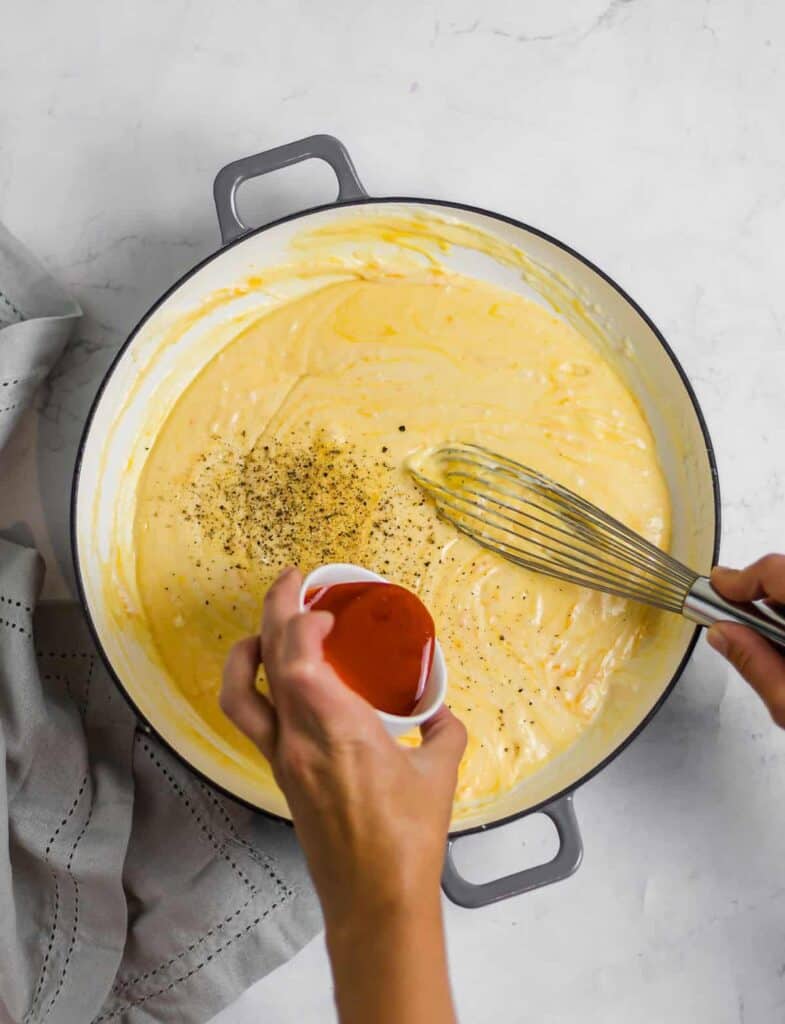
- Buffalo hot sauce (Frank’s): The tangy finishing touch. A vinegar-based hot sauce brightens the cheddar flavor at this small amount without adding real heat.
Why This Cheese Sauce Doesn’t Turn Grainy
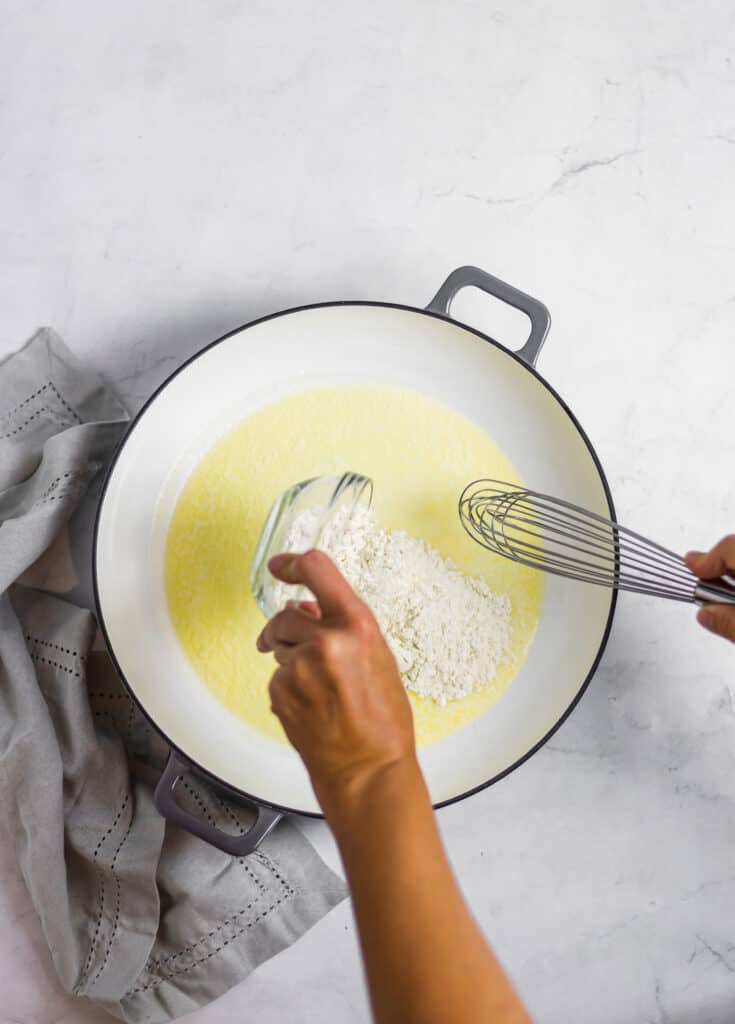
Here’s how to make cheese sauce for mac and cheese that stays silky from the pot to the plate: build the roux first, then manage the heat carefully once the cheese goes in. A roux — butter and flour cooked together — thickens the milk before any cheese is added, and that starchy base is what keeps cheese proteins from clumping together later. Once the base is smooth and coats the back of a spoon, it’s ready for cheese.
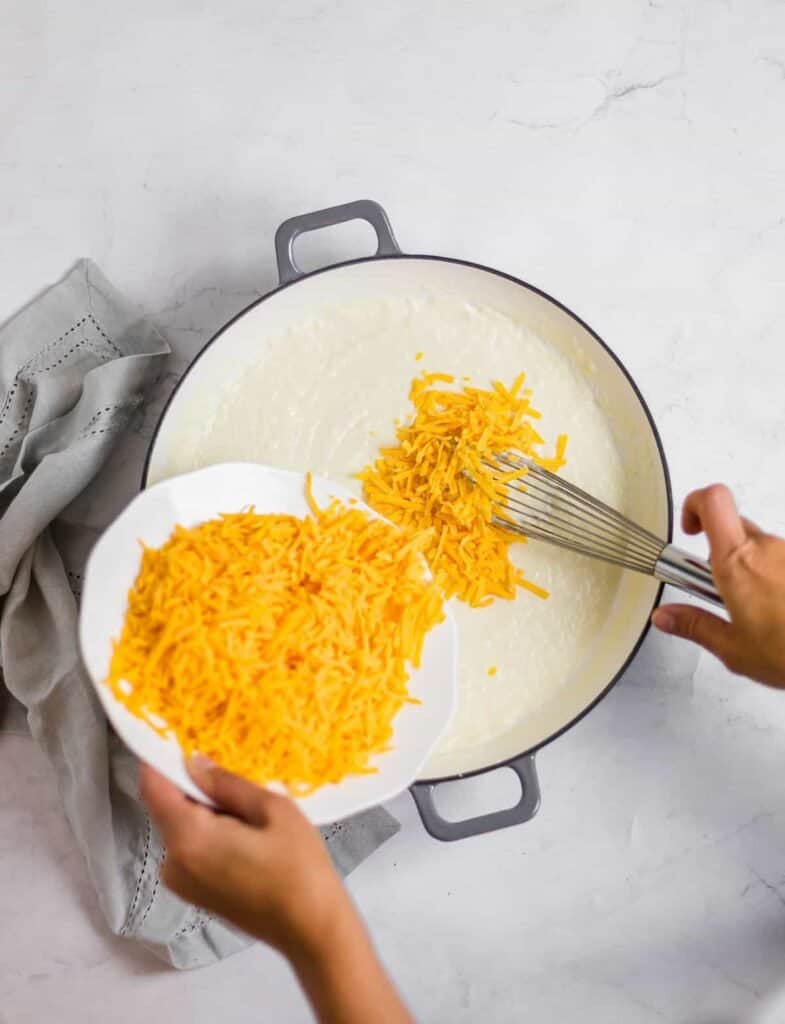
The most common cause of a grainy or oily cheese sauce is too much heat. Once cheese is added to a sauce hotter than about 160°F, its proteins tighten up and squeeze out fat, and that’s exactly what creates a broken, gritty texture. That’s why the pot comes off direct heat (or drops to the lowest setting) before the cheese goes in, and why it’s added gradually — a handful at a time, whisked until melted — instead of dumped in all at once.
This same roux technique is what makes broccoli and cheese casserole so creamy — it’s the backbone of every cheese-based recipe on this site. If a sauce does turn out grainy, here’s what’s usually going on and how to fix it:
- Pre-shredded cheese: The anti-caking starch on bagged, shredded cheese keeps it from melting cleanly. Shredding from a block fixes this for most people.
- Too much heat: Keep the pot off heat or on the lowest setting once cheese is added, since high heat is what breaks the sauce.
- Adding cheese too fast: Melt each handful before adding the next so the sauce emulsifies evenly instead of clumping.
- A roux that isn’t fully thickened: Wait until the milk mixture coats the back of a spoon before adding any cheese.
- Emergency fix: If the sauce is already grainy, whisk in a splash of warm milk over low heat, or melt in a slice of American cheese — its sodium citrate content can help re-emulsify a broken sauce.
Tips for the Best Mac and Cheese Sauce
A few small habits make the difference between an average mac and cheese sauce recipe and one that’s glossy and spoon-coating every time:
- Grate your own cheddar: Freshly grated cheese melts smoothly, while pre-shredded cheese is far more likely to turn gritty.
- Keep the heat gentle once cheese is involved: This is what prevents a broken or grainy sauce.
- Adjust thickness intentionally: A splash of warm milk loosens a sauce that’s too thick, while a minute or two more over low heat lets the roux finish thickening a loose one. It also thickens further as it cools.
- Salt after tasting: Cheddar and hot sauce both vary in saltiness, so taste before adding more.
- Use it promptly: The sauce is at its best hot, glossy, and spoon-coating right before it’s tossed with pasta — pour it straight over stovetop mac and cheese and serve right away.
Best Cheeses for Mac and Cheese Sauce
Sharp cheddar is the gold standard for this mac and cheese sauce, but here’s how other cheeses change the result:
- Sharp cheddar (recommended): Boldest flavor, smooth melt — the gold standard for this recipe.
- Colby Jack: Milder and creamier — great for kids or anyone who prefers a gentler cheese flavor.
- Gouda: Adds smokiness and richness. Smoked gouda works well for a twist.
- White cheddar: Same tang as yellow cheddar but a more “grown-up” look. Try the white cheddar mac and cheese version.
- Gruyère: Nutty and complex — mix 50/50 with cheddar for depth.
- Monterey Jack: Very mild and super melty — good for a creamy sauce without strong cheese flavor.
Rule of thumb: Swap up to half the sharp cheddar for another cheese. Going 100% mild will leave the sauce flat — and no matter which cheese is used, always shred it fresh from a block rather than reaching for pre-shredded bags.
Variations and Substitutions
- Extra-sharp or white cheddar: A flavor and color variation — keep the cheese freshly shredded either way.
- Milder, family-friendly sauce: Cut back or skip the hot sauce; it’s optional for heat-sensitive eaters, since it adds tang rather than spice at this amount.
- More complex cheese blend: Pair cheddar with a smooth-melting cheese like Monterey Jack, Gruyère, or fontina, rather than making a hard aged cheese the only cheese in the pot.
- Gluten-free: Swap the flour for cornstarch at half the amount (1½ tablespoons cornstarch for the 3 tablespoons flour). Make a slurry with a splash of cold milk first, then whisk it into the warm milk. It won’t be quite as silky as a roux-based sauce, but this swap has been tested and keeps the recipe gluten-friendly.
Ways to Use This Cheese Sauce
This sauce started as the base for stovetop mac and cheese, but it’s just as good in a few other spots:
- Any noodle: This cheese sauce for pasta works well with shells, penne, cavatappi, or rigatoni — any shape that traps sauce in its ridges or hollows, though it’s built specifically for macaroni.
- Baked mac and cheese: Combine with cooked noodles, top with extra shredded cheese and breadcrumbs, and bake until golden and bubbly. This is the exact sauce used in baked mac and cheese.
- Nachos: Pour over chips with all the fixings — buffalo chicken nachos are incredible with this sauce. For a thinner, chile-forward nacho sauce instead, try this homemade nacho cheese sauce.
- Steamed vegetables: Broccoli and this sauce make the easiest side dish. For a sauce formulated specifically for vegetables, use this cheese sauce for broccoli instead.
- Dip: Serve warm with tortilla chips or soft pretzels. For something lighter, try this cottage cheese queso.
- Burgers and sandwiches: A drizzle on top works like a cheese-pub sauce — it’s absurd in the best way.
Storing and Reheating Cheese Sauce
- Refrigerator: Store this macaroni and cheese sauce in an airtight container for up to 3–4 days. It will firm up as it chills — that’s completely normal.
- Reheating: Warm gently on the stovetop over low heat, whisking in a splash of milk 1 tablespoon at a time until it loosens back up. High heat can cause the sauce to separate, so keep it low and slow. The microwave works too, in 30-second bursts, stirring between each one.
- Freezing: Not recommended. Roux-based dairy sauces like this one can curdle or separate after thawing, so it’s best made fresh.
Frequently Asked Questions
It’s not recommended. Pre-shredded cheese is coated in anti-caking agents like cellulose or potato starch that prevent it from melting smoothly. The result is a grainy, gritty sauce instead of the silky texture you want. Shred cheese fresh from a block instead — it only takes a couple of minutes and the difference is night and day.
The most common reasons are: using pre-shredded cheese, adding cheese to a sauce that’s too hot, or not thickening the roux enough before adding the cheese. Make sure the roux is fully thickened (it should coat the back of a spoon), remove the pot from heat or turn it to the lowest setting, and add the cheese a handful at a time, whisking until each addition melts completely. If it’s already grainy, try whisking in a splash of warm cream on low heat.
Sharp cheddar is the go-to choice — it has the boldest flavor and melts beautifully. For a milder sauce, try Colby Jack or Monterey Jack. For something more complex, mix sharp cheddar 50/50 with Gruyère or smoked Gouda. Just don’t go 100% with a very mild cheese, or the sauce will taste flat.
Yes — cornstarch can substitute for the flour at half the amount (so 1.5 tablespoons cornstarch instead of 3 tablespoons flour). Make a slurry with the cornstarch and a splash of cold milk before adding it to the warm milk. It won’t be quite as silky as a roux-based sauce, but it works well and makes the recipe gluten-friendly.
Absolutely! This is the exact sauce used in this site’s baked mac and cheese recipe. Just combine the sauce with cooked noodles, transfer to a baking dish, top with extra shredded cheese and breadcrumbs, and bake at 350°F for about 20–25 minutes until golden and bubbly.
Add 2% milk (or whatever milk was used) one tablespoon at a time, whisking it in over low heat until the sauce reaches the desired consistency. Don’t add too much at once — it’s easier to thin a sauce than to re-thicken it.
More Mac and Cheese Recipes
- Tuscan Chicken Mac and Cheese
- Baked Mac and Cheese
- White Cheddar Mac and Cheese
- Best Mac and Cheese Recipe
- ALL Mac and Cheese Recipes
Cheese Sauce for Mac and Cheese
Ingredients
- 3 tablespoons unsalted butter
- 3 tablespoons all-purpose flour
- 2 cups 2 % milk
- 3 cups shredded sharp cheddar cheese
- 1/2 teaspoon salt
- 1/4 teaspoon granulated garlic, or garlic powder
- 1-2 tablespoons buffalo hot sauce, we used Franks
- 1 lb. cooked noodles
Instructions
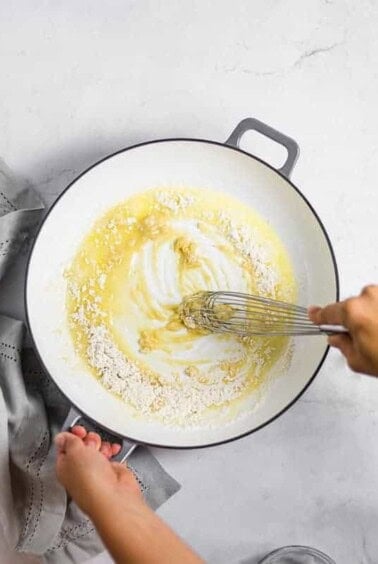
- Melt 3 tablespoons of unsalted butter in a large pot or Dutch oven over medium-high heat, then whisk in 3 tablespoons of all-purpose flour as soon as it’s fully melted. Keep whisking constantly for 1–2 minutes, until the butter and flour form a smooth paste that looks like wet sand — this roux is what keeps the finished sauce thick and smooth instead of thin or grainy.

- Slowly pour in 2 cups of milk, a few splashes at a time at first, whisking constantly so no lumps form. Continue whisking over medium-high heat for 4–6 minutes, until the mixture thickens enough to coat the back of a spoon.
- Once the base is thickened and no longer boiling hard, remove the pot from the heat (or drop it to the lowest setting) and add 3 cups of freshly shredded sharp cheddar cheese a handful at a time. Whisk each addition until fully melted before adding more — taking the pot off direct heat matters here, since cheese heated above about 160°F can tighten up and separate into a grainy, oily sauce instead of staying glossy.
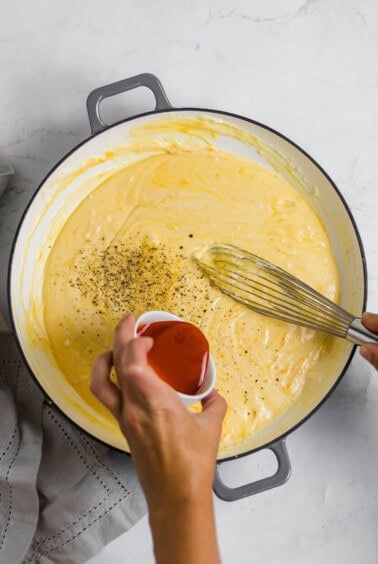
- Whisk in ¼ teaspoon granulated garlic, 1–2 tablespoons buffalo hot sauce, and ½ teaspoon salt, then taste and add more salt if needed since cheddar and hot sauce both vary in saltiness. The sauce is ready when it’s glossy and thick enough to cling to a spoon; if it feels too thick, whisk in a little warm milk until it loosens back up.
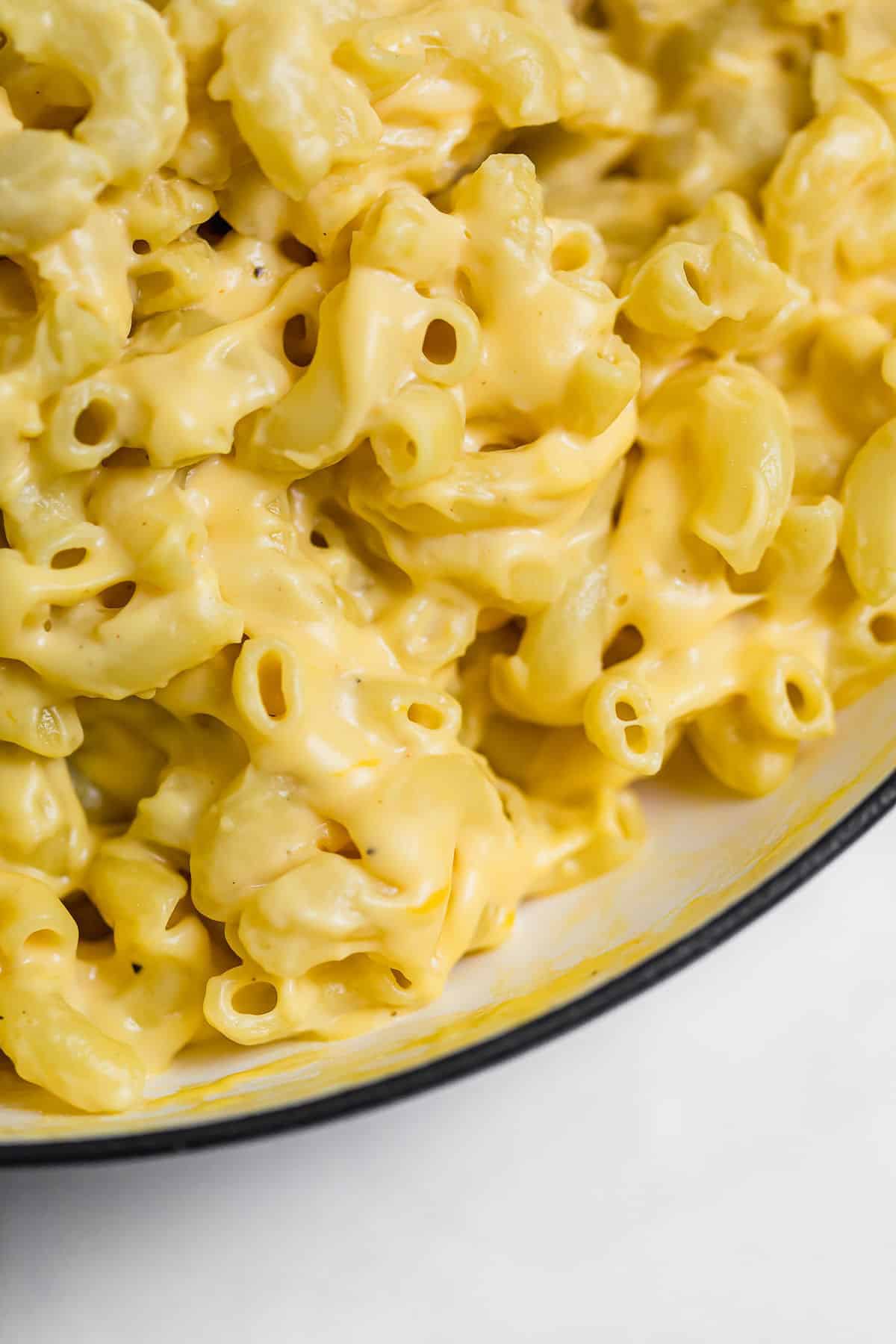
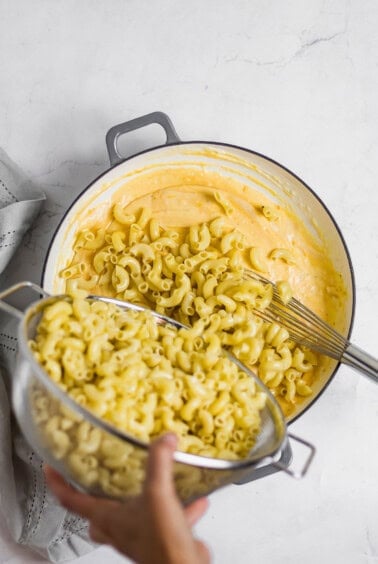
- Toss the warm cheese sauce with 1 lb. of cooked noodles right away, while both are hot, so the sauce coats every piece instead of clumping as it cools. Serve immediately for the glossiest, creamiest texture.
Tips & Notes
- If you would like a thinner cheese sauce, add 2 tablespoons of milk at a time, whisk it into the cheese sauce, and add more until the cheese sauce reaches your desired consistency.
- This mac and cheese sauce is for 1 lb. of macaroni noodles.
- Nutrition information does NOT include noodles.
- August 31, 2025: This recipe was tweaked to use slightly less milk and to specify sharp cheddar cheese based on reader feedback.
- August 12, 2026: Refreshed with a deeper explanation of why cheese sauce turns grainy and a clearer heat-transition step for adding the cheese.
Watch It
Nutrition
Nutrition information is automatically calculated, so should only be used as an approximation.
Don’t forget to tag your posts on social media with the hashtag #cheeseknees, we’d love to see what you’re up to!
Related Recipes










I love this recipe! I’ve made it at least twenty plus times over the years. I did make a few changes though. And I think it improves the flavor – I use salted butter, whole milk and I make it gluten-free with any gluten free flour. A winner of a recipe 👍
Aww so happy to hear you love this sauce as much as we do!