Goat Cheese Ravioli

9/22/2026
This post may contain affiliate links. Please read our disclosure policy.
This homemade goat cheese ravioli wraps a creamy filling of goat cheese, ricotta, Parmesan, sage, garlic, and lemon in tender fresh pasta. Toss it with the optional sage brown butter for a nutty, restaurant-worthy finish.
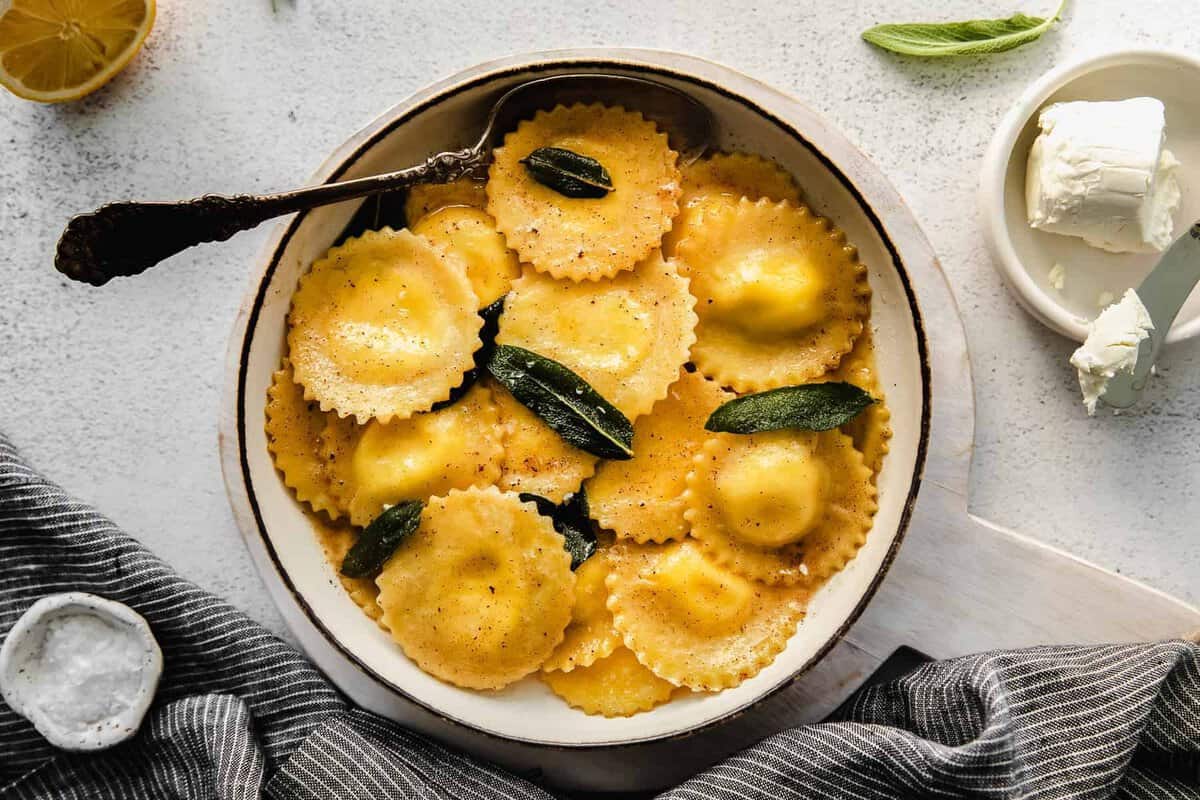
Homemade ravioli takes a little time, but the process is approachable with either a pasta roller or rolling pin. Keep the unused dough covered as you work, and roll each sheet until it is thin enough to see your fingers through it.
For more homemade pasta, use our ravioli-making guide, or try our classic Homemade Cheese Ravioli.
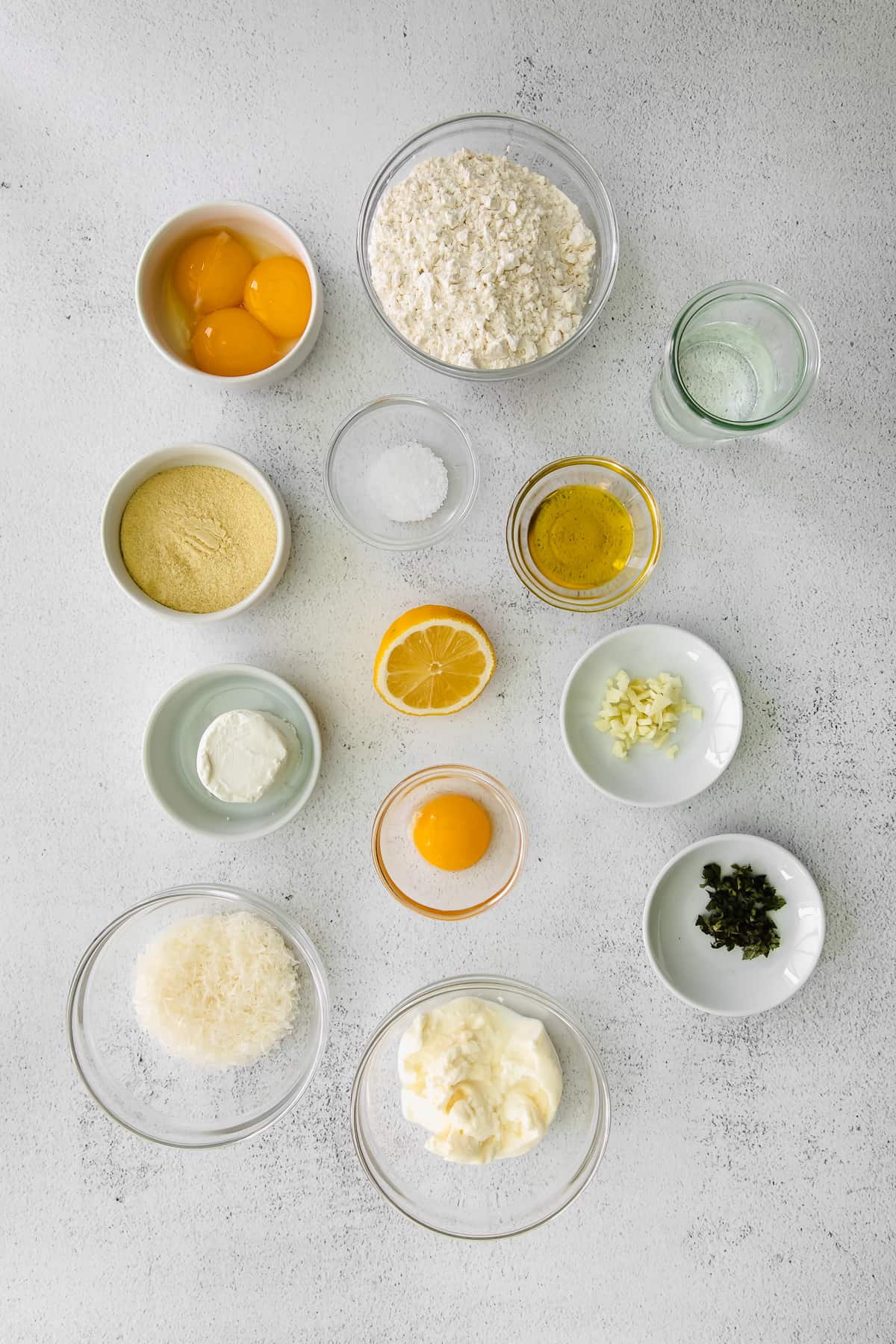
Goat Cheese Ravioli Ingredients
You’ll need a simple egg-yolk pasta dough and a creamy, herb-flecked goat cheese filling.
For the Dough
- All purpose flour: this creates a soft and chewy pasta. If you have 00 (“double O”) flour on hand, that would be even better!
- Semolina flour: this flour adds a bit of bite to the pasta.
- Salt: a bit of salt seasons the pasta so it doesn’t taste bland!
- Egg yolks: you’ll need these to make the pasta dough rich and smooth. It also helps hold the dough together so it doesn’t crumble apart.
- Olive oil: for a bit of extra richness and flavor.
- Water: water can help turn the dough together into a smooth, silky dough. It’s important to use cold water so your pasta doesn’t become too warm while it rests.
For the Filling
- Ricotta cheese: provides a smooth, subtle filling within the dough.
- Parmesan cheese: this cheese adds a bit of saltiness and nuttiness to the filling.
- Goat cheese: the true star of the show! Make sure that it is fully softened, so you don’t end up with big lumps in your filling.
- Sage: we love the combination of sage and goat cheese, but rosemary, parsley, or thyme would also be delicious substitutions.
- Garlic: this adds great flavor to the filling.
- Lemon juice: for a bit of freshness and acid. ¼ teaspoon lemon zest is also delicious!
- Egg yolk: adds a bit of extra richness and creaminess to the filling.
try it!
Three Cheese Ravioli
Love ravioli? Try our incredibly easy three cheese ravioli.
How to Make Goat Cheese Ravioli
The recipe card below contains the complete method. These technique cues will help your ravioli roll, seal, and cook successfully.
Roll the Pasta Dough
Keep the unused dough tightly covered so it stays pliable. With a KitchenAid pasta attachment, begin at setting #1 and work gradually to setting #5, dusting with semolina as needed. If using a rolling pin, roll each piece evenly until the dough is thin enough to see your fingers through it.
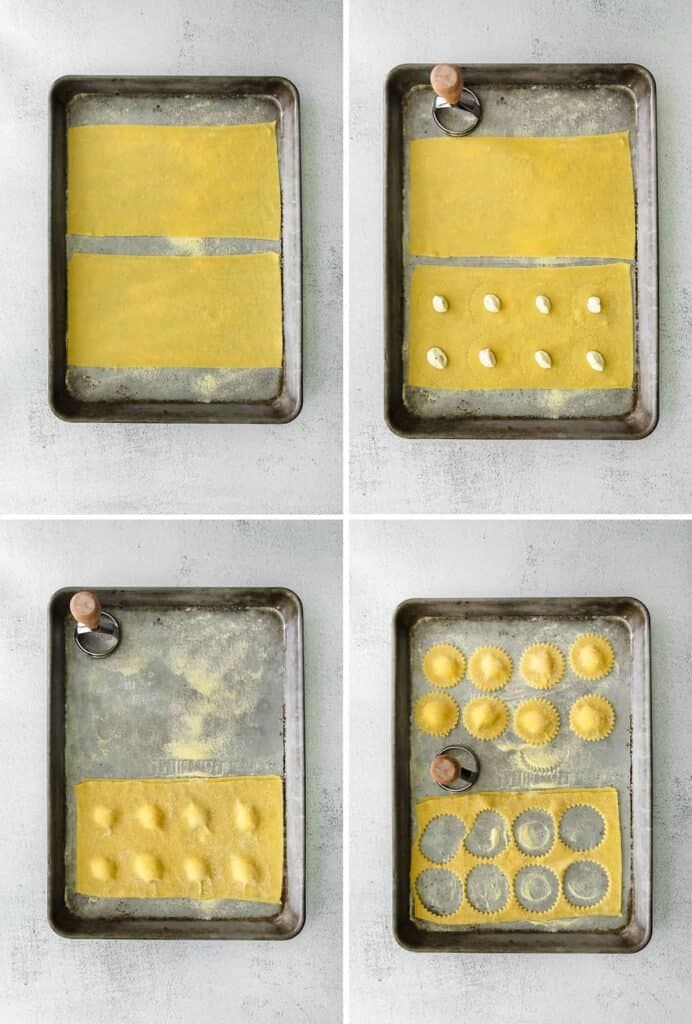
Fill and Seal the Ravioli
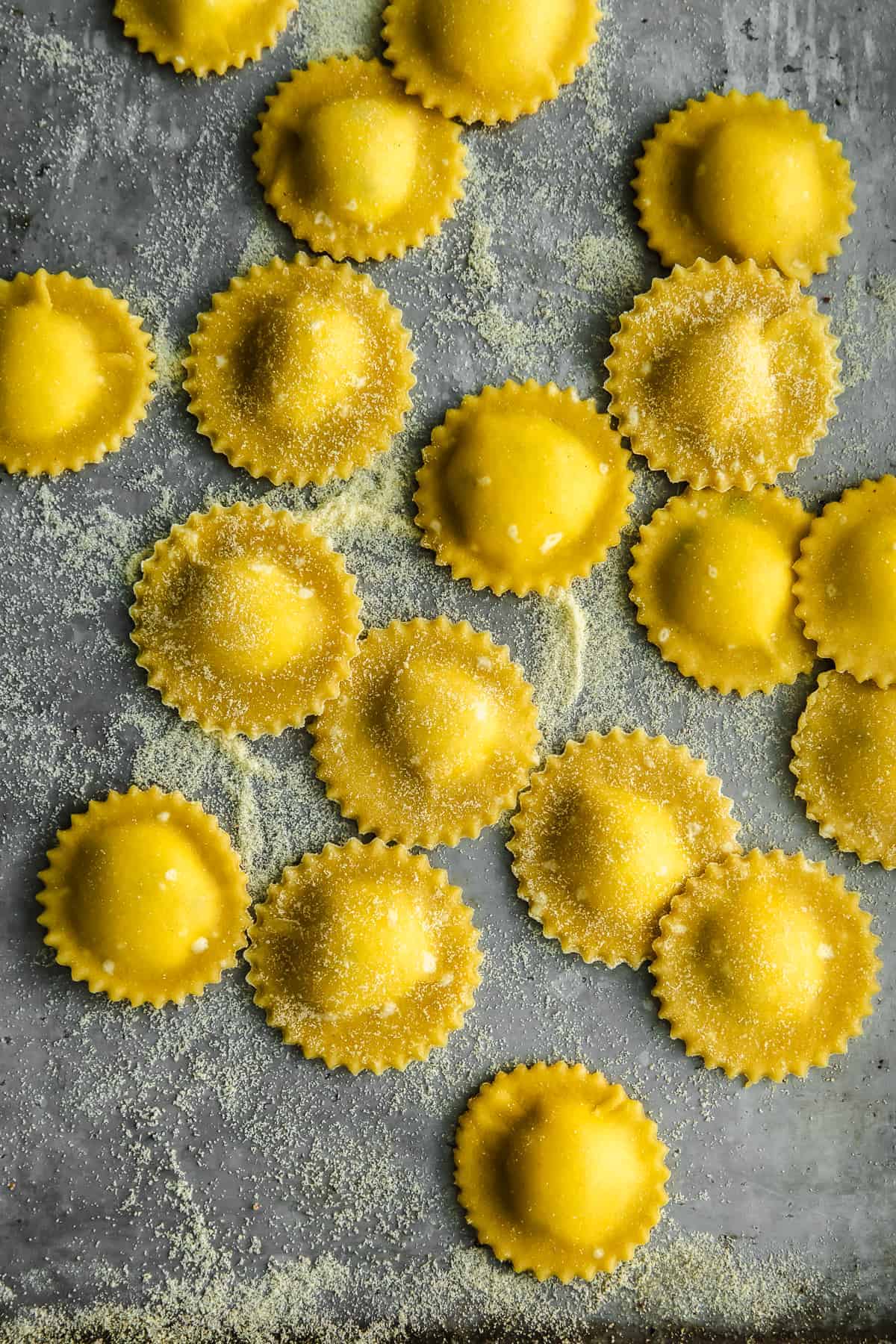
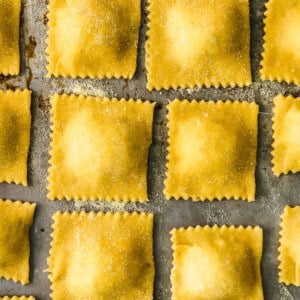
Pipe small mounds of filling onto one pasta sheet, leaving enough space to cut each ravioli. Lay the second sheet on top, press out the air around every mound, and seal the edges firmly. Transfer the cut ravioli to a semolina-dusted baking sheet in a single layer so they do not stick together.
Boil and Finish
Boil the fresh ravioli for about 2 minutes, or until they float. The 5-minute cook time includes boiling the ravioli and finishing them in the optional sage brown butter sauce.
Tested Ingredient Substitutions
- Semolina flour: Replace it with an equal amount of additional all-purpose flour. The pasta will be slightly less textured.
- Fresh sage: Substitute fresh rosemary, parsley, or thyme in the filling.
- Plain goat cheese: Use a flavored goat cheese, such as garlic and herb.
- Fresh garlic: Substitute 1 teaspoon garlic powder.
- Lemon: Add ¼ teaspoon lemon zest for more citrus flavor.
How to Serve Goat Cheese Ravioli
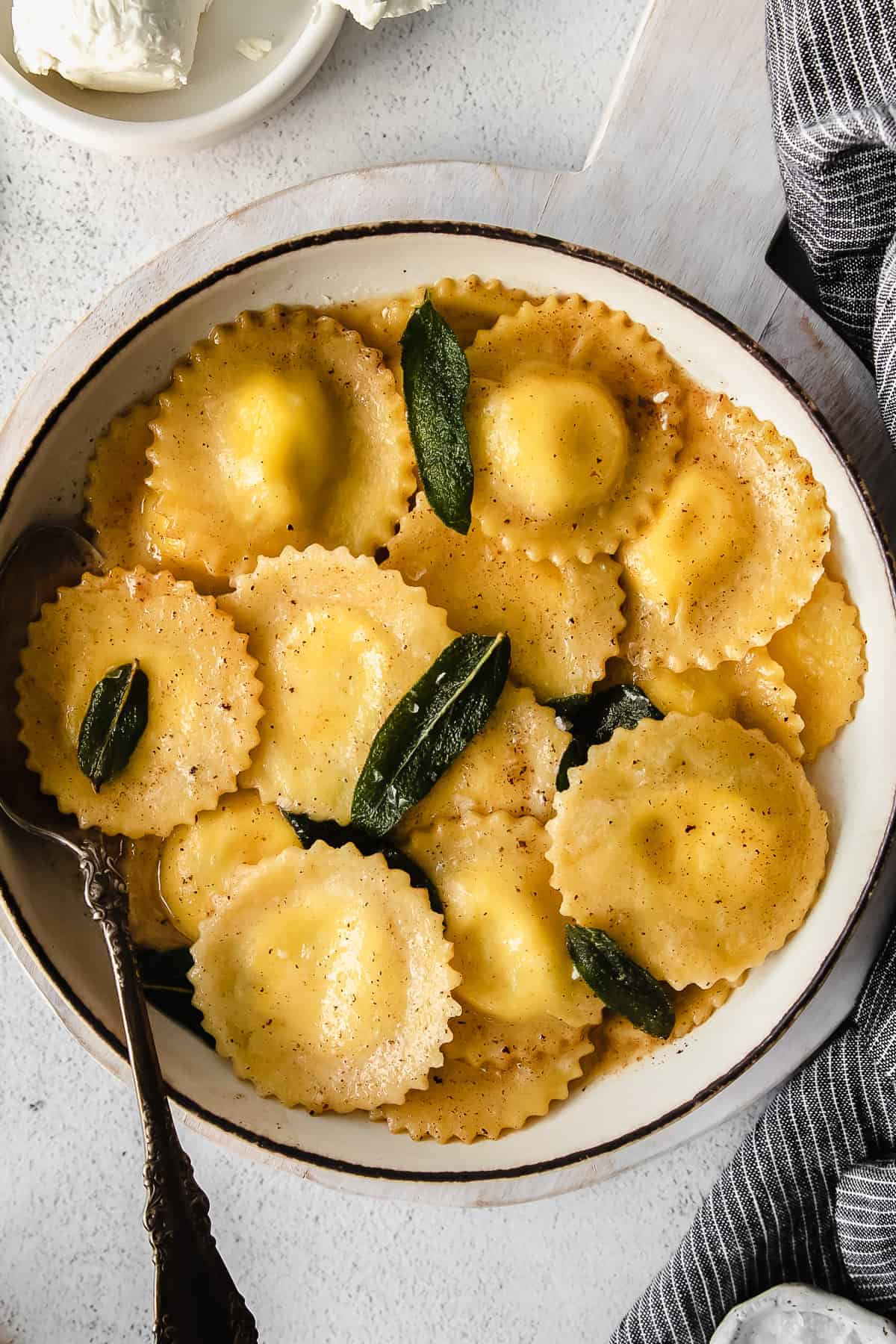
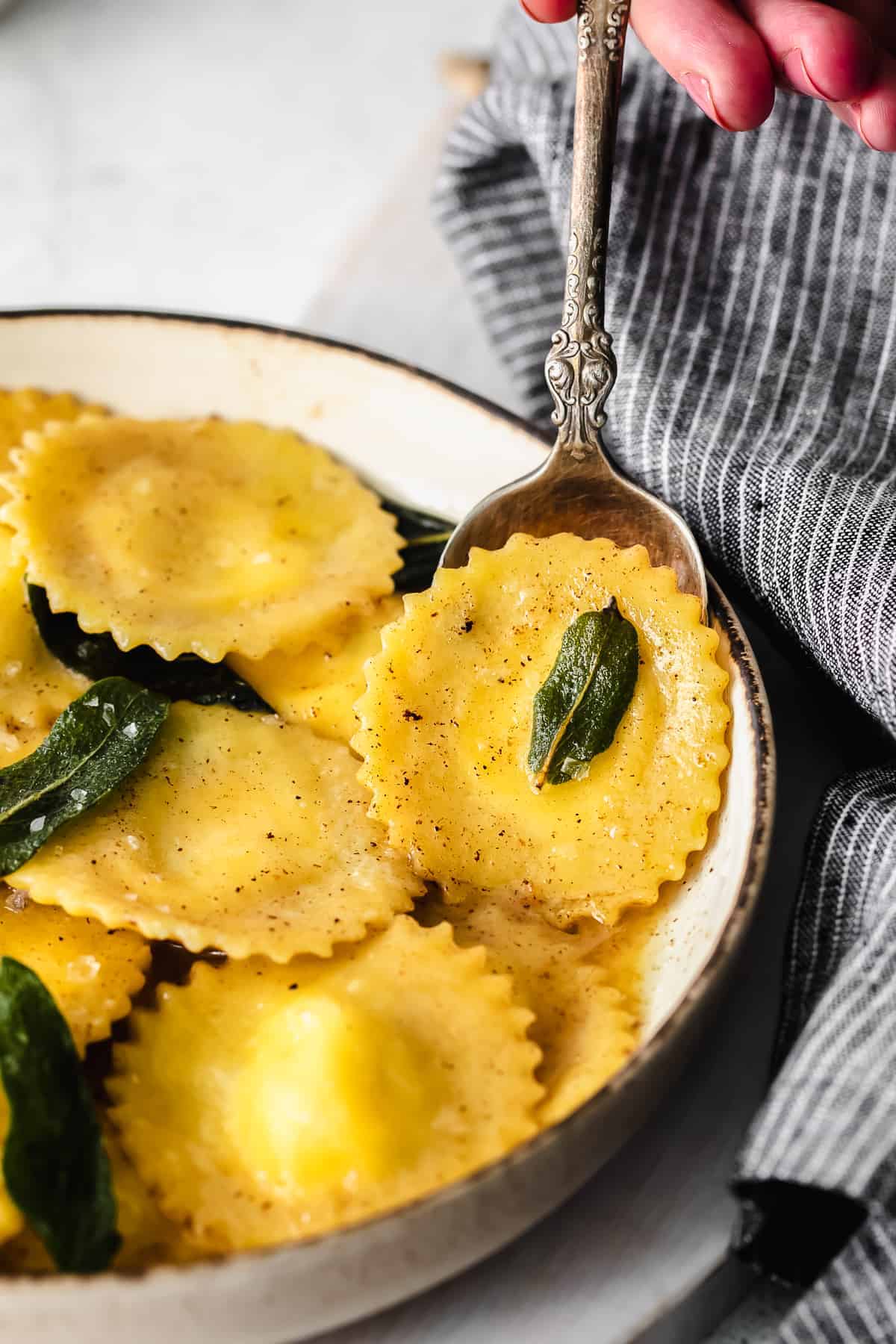
Sage brown butter is our favorite tested pairing for goat cheese ravioli. The nutty butter and crisp sage complement the tangy cheese and lemon in the filling without covering them up.
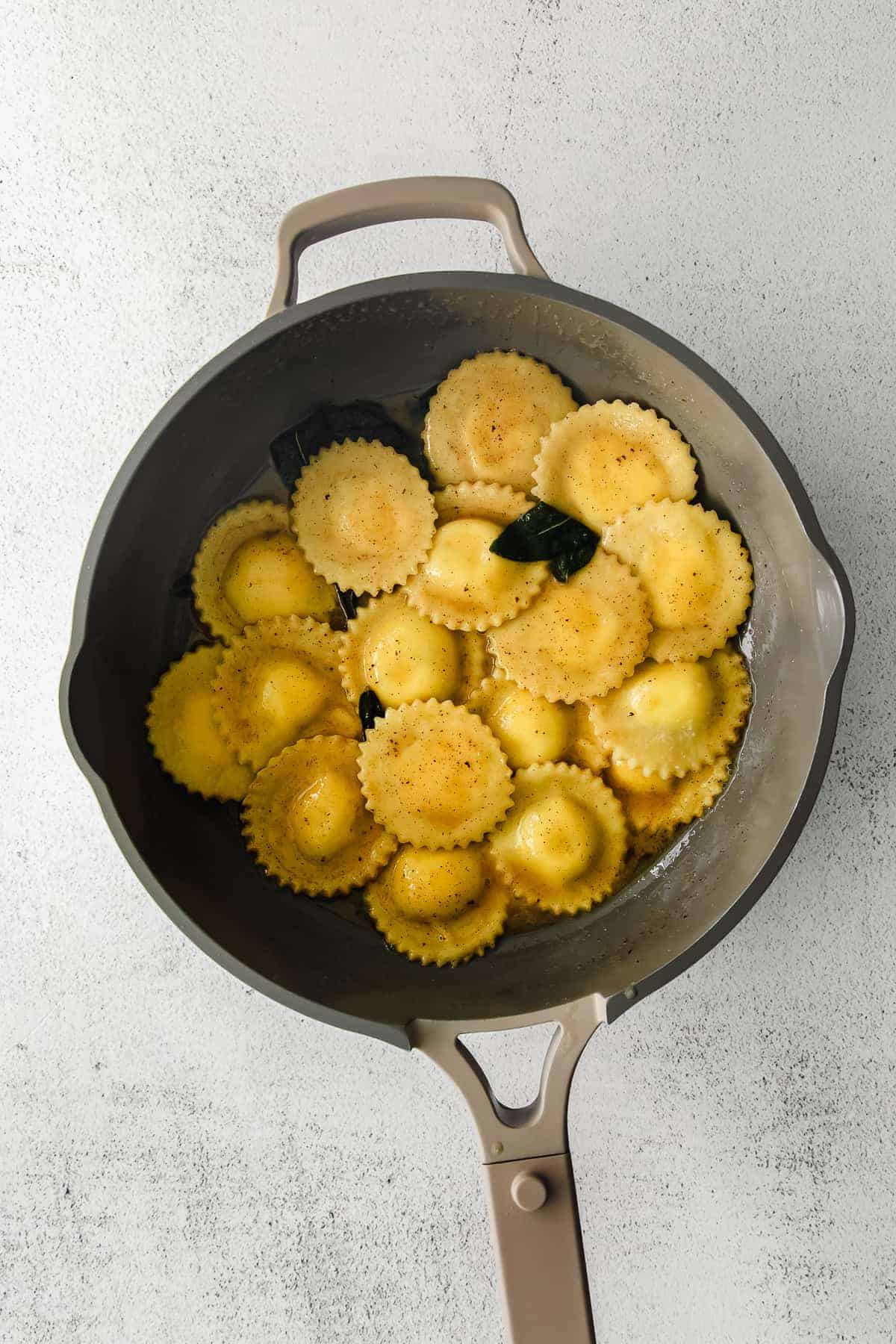
Make the sage brown butter: Melt 4 tablespoons butter over medium heat and cook until browned and nutty-smelling. Add 6–7 fresh sage leaves, remove the skillet from the heat, and stir in ¼ cup reserved pasta water. Add the cooked ravioli, toss gently, and season the sauce with salt and pepper to taste.
You can also serve the ravioli with pesto, marinara, or Alfredo sauce.
Make-Ahead, Storage, and Freezing
Make ahead: Arrange uncooked ravioli in a single layer, cover well, and refrigerate for up to 24 hours before cooking.
Store cooked ravioli: Refrigerate cooked ravioli in an airtight container for up to 3 days.
Freeze uncooked ravioli: Arrange the ravioli in a single layer without touching and freeze until solid. Transfer the frozen ravioli to a freezer bag.
Cook from frozen: Add the frozen ravioli directly to a large pot of salted boiling water. They may need about 1 additional minute to float and cook through. Transfer them to the sauce with a slotted spoon.
Goat Cheese Ravioli FAQs
Can I Make Goat Cheese Ravioli Without a Pasta Machine?
Yes. Roll the rested dough with a rolling pin until it is thin enough to see your fingers through it. Keep the unused dough covered so it does not dry out while you work.
What Sauce Goes With Goat Cheese Ravioli?
Sage brown butter is the primary tested pairing. Its nutty flavor and fresh sage complement the tangy goat cheese and lemon in the filling. Pesto, marinara, and Alfredo sauce also work.
Can I Make Goat Cheese Ravioli Ahead of Time?
Yes. Arrange the uncooked ravioli in a single layer, cover them well, and refrigerate for up to 24 hours before cooking.
Can I Freeze Goat Cheese Ravioli?
Yes. Freeze the uncooked ravioli in a single layer without touching, then transfer them to a freezer bag once solid. Cook them directly from frozen; they may need about 1 additional minute to float and cook through.
How Do I Keep Homemade Ravioli From Opening While Boiling?
Press out the air around each mound of filling before sealing, then firmly seal the dough around the edges. Keep the dough covered while working so it stays pliable, and avoid overfilling the ravioli.
Goat Cheese Ravioli

Equipment
- Food processor
- Pasta roller or rolling pin
- Piping bag or zip-top bag
- Large pot
- Skillet
Ingredients
For the Filling
- ¼ cup whole milk ricotta cheese
- ¼ cup grated parmesan cheese
- 2 ounces goat cheese, softened
- 1 teaspoon fresh sage, minced
- 1 garlic clove, minced
- 1 teaspoon fresh lemon juice
- 1 large egg yolk
For the Dough
- 1 cup all-purpose flour
- ¼ cup semolina flour
- 1 teaspoon kosher salt
- 3 large egg yolks
- 2 tablespoons olive oil
- ¼ cup cold water
Optional Sage Brown Butter
- 4 tablespoons butter
- 6–7 leaves fresh sage
- ¼ cup reserved pasta water
- salt, to taste
- pepper, to taste
Instructions
For the Filling
- Combine the ricotta, Parmesan, goat cheese, sage, garlic, and lemon juice in a small bowl.
- Add the egg yolk and stir until smooth. Transfer the filling to a piping bag or zip-top bag with one corner cut off. Refrigerate until ready to use.
For the Dough and Assembly
- Add the all-purpose flour, semolina flour, and kosher salt to a food processor and pulse to combine.
- Add the egg yolks and olive oil and pulse to combine.
- With the food processor running on low, add the cold water and pulse until the dough forms a loose ball.
- Turn the dough onto a clean surface and knead for about 30 seconds, just until it forms a smooth ball.
- Wrap the dough tightly and let it rest at room temperature for 30 minutes. Make the filling while the dough rests.
- Dust the work surface with semolina and divide the dough in half. Keep one half tightly covered while you roll the first piece.
- With a KitchenAid pasta attachment, begin at setting #1 and pass the dough through the rollers, moving down one setting at a time until you reach setting #5. Dust with semolina as needed. Or, use a rolling pin to roll the dough evenly until it is thin enough to see your fingers through it.
- Trim the rolled dough into 2 equal rectangles.
- Pipe small mounds of filling onto one rectangle, leaving enough space between them to cut the ravioli.
- Place the second sheet of dough on top. Press out the air around each mound of filling, then seal the dough firmly around the edges.
- Cut the ravioli and arrange them in a single layer on a semolina-dusted baking sheet.
- Repeat the rolling, filling, and cutting process with the remaining dough.
- Let the ravioli dry at room temperature for 30 minutes.
Cook and Finish
- Bring a large pot of salted water to a boil. Cook the fresh ravioli until they float, about 2 minutes. Reserve ¼ cup pasta water, then transfer the ravioli with a slotted spoon.
- Meanwhile, melt the butter in a skillet over medium heat and cook until it is browned and smells nutty. Add the sage leaves, remove the skillet from the heat, and stir in the reserved pasta water.
- Add the cooked ravioli to the sage brown butter and toss gently. Season the sauce with salt and pepper to taste. The complete cooking phase takes about 5 minutes.
Tips & Notes
- Make ahead: Arrange uncooked ravioli in a single layer, cover well, and refrigerate for up to 24 hours before cooking.
- Tested substitutions: Replace the semolina with additional all-purpose flour; use rosemary, parsley, or thyme instead of sage; use flavored goat cheese; replace the fresh garlic with 1 teaspoon garlic powder; or add ¼ teaspoon lemon zest.
- Freeze: Freeze uncooked ravioli in a single layer without touching, then transfer them to a freezer bag once solid. Cook directly from frozen, allowing about 1 additional minute.
- Storage: Refrigerate cooked ravioli in an airtight container for up to 3 days.
- Nutrition: Nutrition is calculated per ¼ of the complete ravioli batch and excludes the optional sage brown butter sauce.
Nutrition
Nutrition information is automatically calculated, so should only be used as an approximation.
Don’t forget to tag your posts on social media with the hashtag #cheeseknees, we’d love to see what you’re up to!
Related Recipes










I make a new recipe from the internet on average once a week. This was the best thing I have made in months and months and months.
I do the weekly “52 weeks of cooking” challenges on reddit and was baffled as to what to do for “Homemade Pasta” week with no specialized pasta equipment, but I used a rolling pin and this recipe (I specifically wanted to use goat cheese).
I thought to myself there would be no possible way it would taste good enough to be worth the effort, but I was wrong. It was to die for. The only change I’d make is lessening the amount of salt in the filling which was a bit overwhelming. But the flavor combination and process was a winner. Thank you so much for my first homemade pasta recipe!!
Made this recipe and it was easy to follow and was soooo delicious!!! Will make again!
This was so delicious! Making for my family on Christmas!
LOVE this idea! What a fun Christmas meal 😀