How to Thicken Pasta Sauce: 6 Easy Methods That Work

8/11/2026
This post may contain affiliate links. Please read our disclosure policy.
Knowing how to thicken pasta sauce can turn a watery pan of noodles into dinner that actually holds onto every bite. I reach for a different fix depending on whether I am working with tomato, cream, or cheese sauce, how much time I have, and whether I want to preserve the sauce’s original flavor or intentionally make it richer. For most tomato sauces, reduction is my first choice; starches and dairy are useful, more situational tools.
Use this guide to choose the fix that makes sense for your sauce instead of adding a random thickener. If you are wondering how to make pasta sauce thicker without changing its flavor, start with the comparison below.
Jump to a Method
- Reduce the sauce
- Add tomato paste
- Finish with starchy pasta water
- Make a roux
- Use a cornstarch slurry
- Add cheese or dairy
- Troubleshoot thin sauce
- FAQs
Choose Your Fix
| Method | Best for | Time | Flavor/texture effect | Watch-out |
|---|---|---|---|---|
| Reduce | Tomato sauces | 10–20 minutes | Concentrates flavor and body | Also concentrates salt, heat, and acidity |
| Tomato paste | Marinara and spaghetti sauce | 3–5 minutes | Adds tomato body, color, and umami | Can taste overly tomato-forward if overused |
| Starchy pasta water | Finishing pasta in a nearly ready sauce | 1–2 minutes | Glossy, better-clinging emulsion | It can loosen a very watery sauce |
| Roux | Cream and cheese sauces | 5–8 minutes | Velvety, stable body | Too heavy for a bright tomato sauce |
| Cornstarch slurry | Fast, neutral rescue | 1–2 minutes | Quick thickness and slight gloss | Can turn gummy if you add too much |
| Cheese or dairy | Rich, creamy sauces | 1–3 minutes | More savory body and cling | Changes flavor, salt, and color |
Why You’ll Love These Pasta Sauce Fixes
- You can match the method to the sauce. Tomato, Alfredo, and cheese sauces do not need the same treatment.
- Most options use pantry staples. I cover heat, tomato paste, pasta water, flour, cornstarch, and cheese.
- The amounts are intentionally small. Start modestly, watch for the right texture, and stop before the sauce becomes pasty.
- The cheese advice is specific. Parmesan, cream cheese, and mascarpone can add body, but extra cheese can also make a sauce salty or grainy.
Start Here: Why Is Your Pasta Sauce Watery?
Before you decide how to thicken pasta sauce, look at what made it thin. Tomatoes and vegetables can release a surprising amount of water, and an uncovered sauce may simply not have simmered long enough. A large, deep pot also slows evaporation compared with a wide skillet.
Sometimes the sauce needs to be more concentrated (reduction), sometimes it needs more body (tomato paste or a roux), and sometimes it needs better cling (starch, fat, and agitation). A broken cream or cheese sauce is its own issue: for example, gentle heat matters when making homemade Alfredo sauce.
The Quickest Way to Thicken Pasta Sauce
If you need to know how to thicken spaghetti sauce right now, use this quick rule: simmer tomato sauce uncovered in a wide pan when you have 10 to 20 minutes; use tomato paste when you need a fast tomato-sauce fix; and use a cornstarch slurry for a neutral emergency fix. Finish pasta in a sauce that is already close with pasta water and vigorous tossing. For white or cheese sauce, make a roux or add the appropriate cheese or dairy finish.
Pasta water is not magic on its own: its starch helps sauce bind and coat noodles while you finish the pasta in the pan. Adding a lot of it to an already thin sauce will initially make the problem worse.
1. Reduce the Sauce in a Wide Pan
For tomato sauces, how to thicken pasta sauce often comes down to one simple move: simmer it uncovered. I pour about 2 cups of sauce into a wide skillet and hold it at a gentle, steady simmer for 10 to 20 minutes, stirring occasionally. The broad surface lets water evaporate faster than a narrow saucepan.
Stop when the sauce coats a spoon and leaves a brief trail when you drag a spatula across the pan. Reduction concentrates flavor along with thickness, so taste before salting. It is especially good for tomato sauces such as five cheese marinara, marinara, spaghetti sauce, and vodka sauce. If the flavor becomes too intense, loosen it a spoonful at a time with unsalted tomato purée or a sauce-compatible liquid.
I do not use aggressive reduction as my first choice for delicate cream or cheese sauces; they can over-reduce, split, or become greasy.
2. Add Tomato Paste for Tomato-Based Sauces
Tomato paste adds concentrated tomato solids, deeper color, and umami, so it is one of my fastest answers for marinara and spaghetti sauce. For 2 cups of sauce, stir in 1 tablespoon of tomato paste, simmer for 2 to 3 minutes, then reassess before adding more. This is an easy way to make pasta sauce thicker while keeping it squarely in the tomato-sauce family.
Tomato paste is a great fit for a tomato-forward sauce such as vodka sauce; it is not my first choice for Alfredo or a pale cheese sauce. It can make sauce more tomato-forward, slightly sweeter, or more acidic. If it tastes too concentrated, balance with a little fat or cheese only if that suits the sauce, then season at the end. I do not treat sugar as a universal fix.
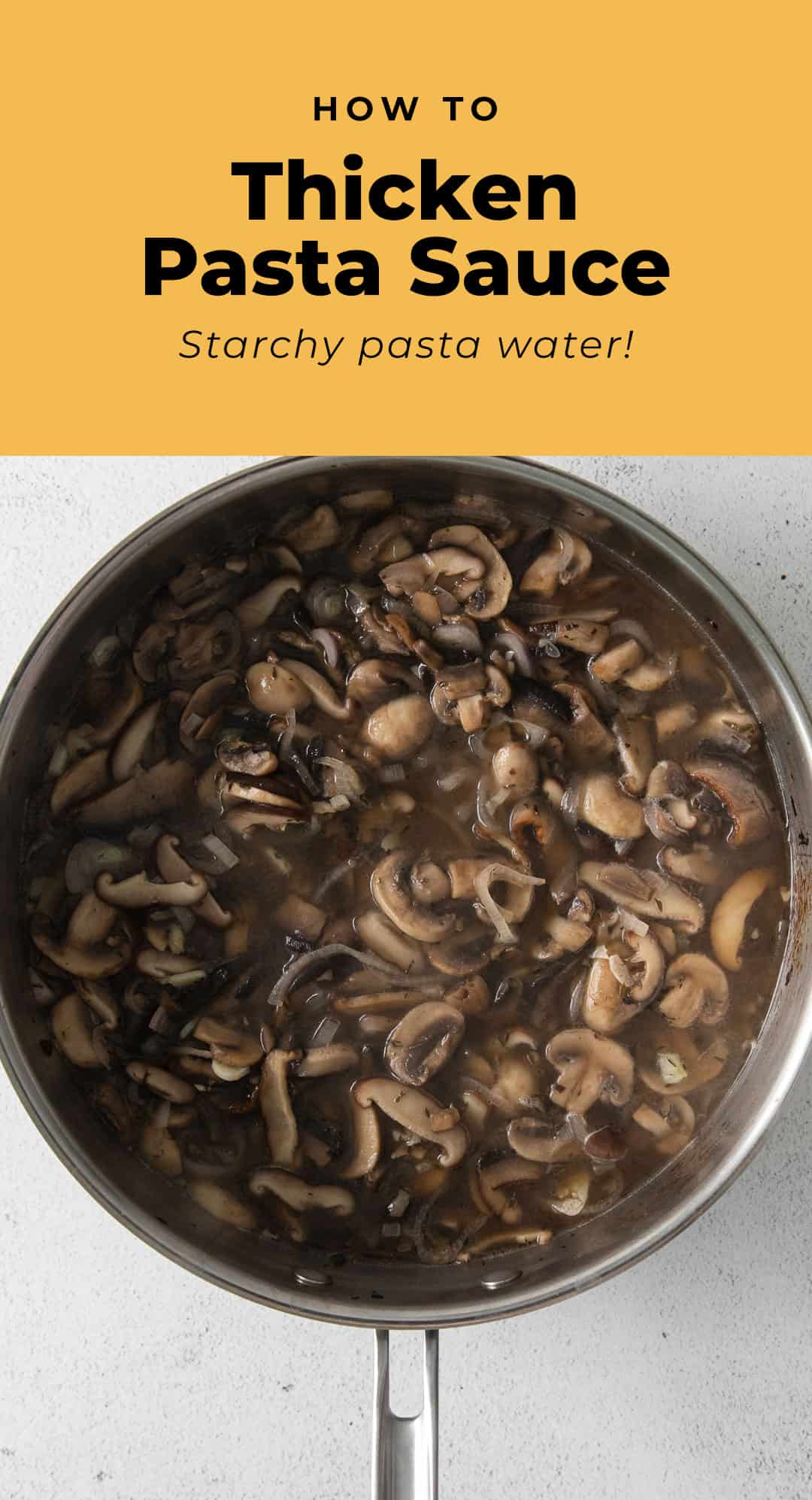
3. Finish Pasta in the Sauce With Starchy Pasta Water
Starchy pasta water helps a sauce emulsify: starch from the noodles, fat in the sauce, and vigorous tossing work together to make a glossy sauce that clings. It is most useful when the sauce is already close to the consistency you want and the pasta will finish cooking in it.
Before draining, reserve at least 1 cup of cooking water. Add the pasta to the sauce over medium heat, then add 1 to 2 tablespoons of reserved water at a time while tossing. Stop when the sauce looks glossy and coats the noodles; if it starts to pool at the bottom of the pan, keep tossing over heat rather than pouring in more water. I use this finish in dishes like garlic Parmesan pasta.
The common mistakes are adding too much water at once or trying to rescue a deeply watery marinara with pasta water alone. Reduce that sauce first.
4. Make a Roux for Creamy and Cheese Sauces
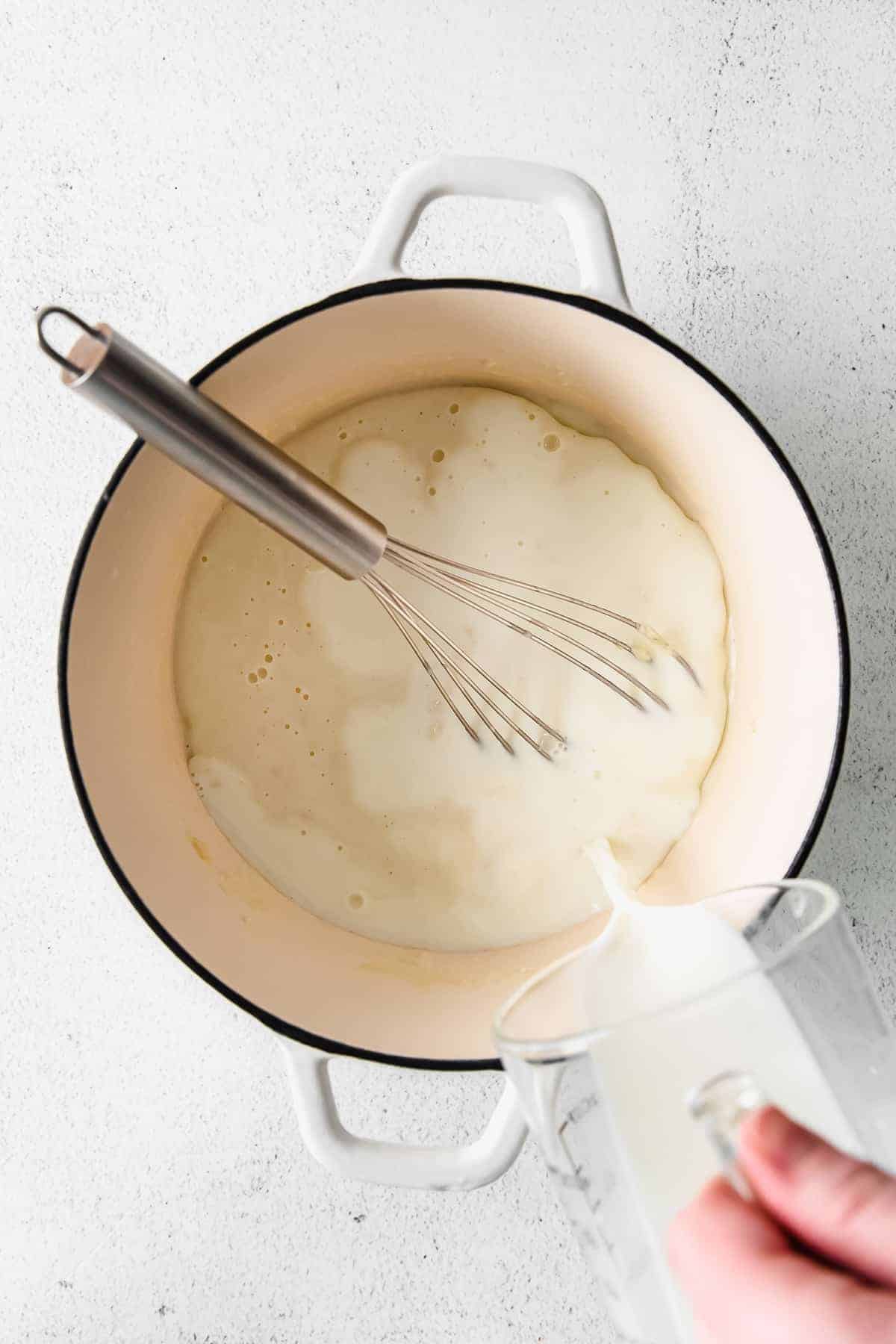
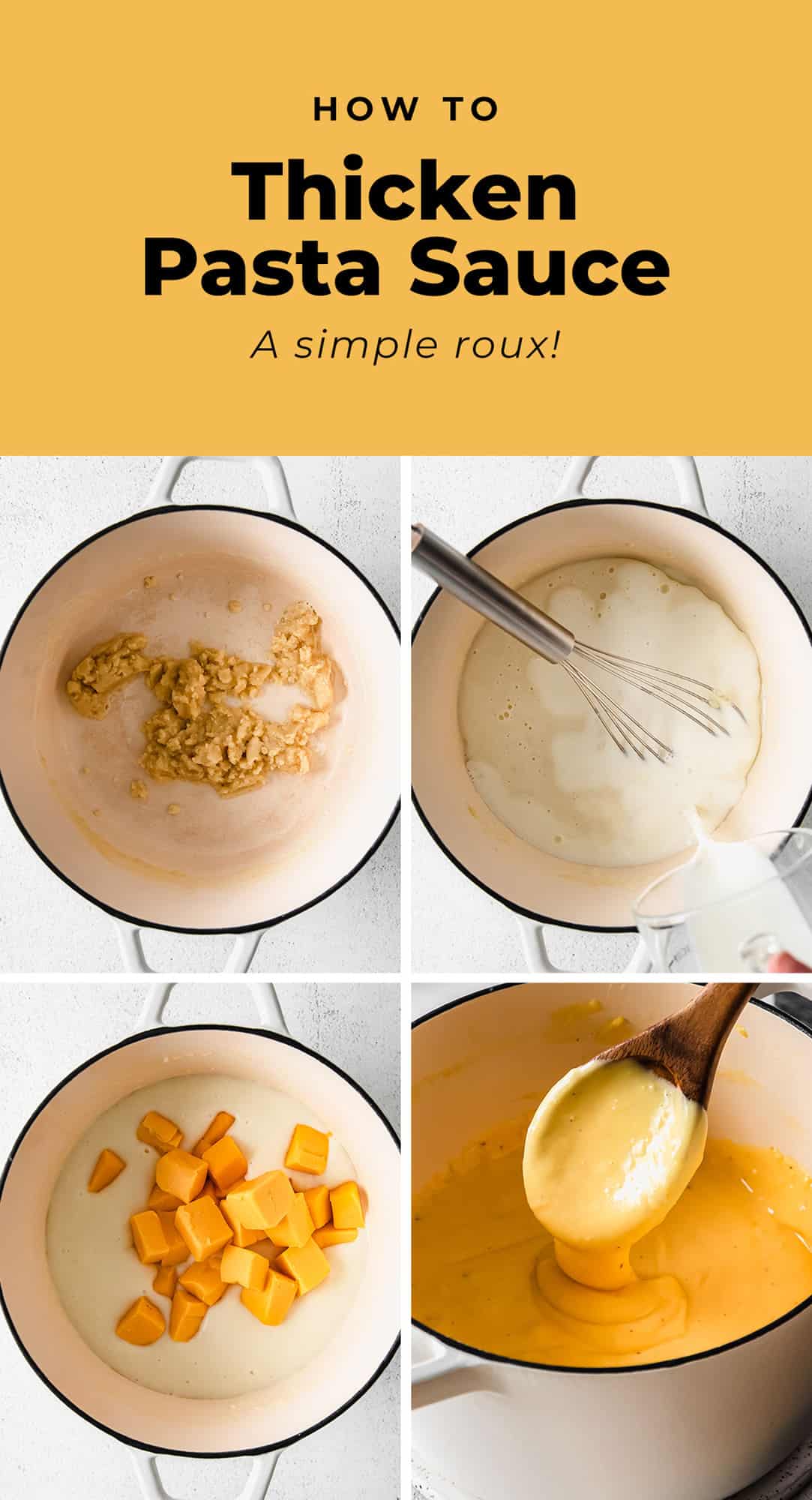
For creamy sauces, how to thicken pasta sauce with flour starts with a roux, not a spoonful of dry flour in the pan. Melt 1 tablespoon butter or another fat in a saucepan, whisk in 1 tablespoon flour, and cook for about 1 minute. Gradually whisk in up to 1 cup of warm sauce or milk until smooth, then simmer gently until velvety. Scale that 1:1 fat-to-flour ratio as needed.
Cooking the flour first removes its raw taste and dispersing it in fat helps prevent lumps. Whisk slowly as you add liquid. A roux gives mac and cheese and cream sauces the stable body I want; see my cheese sauce for mac and cheese for a practical example. I skip it for a light, bright tomato sauce because it can mute flavor and make the texture feel heavy.
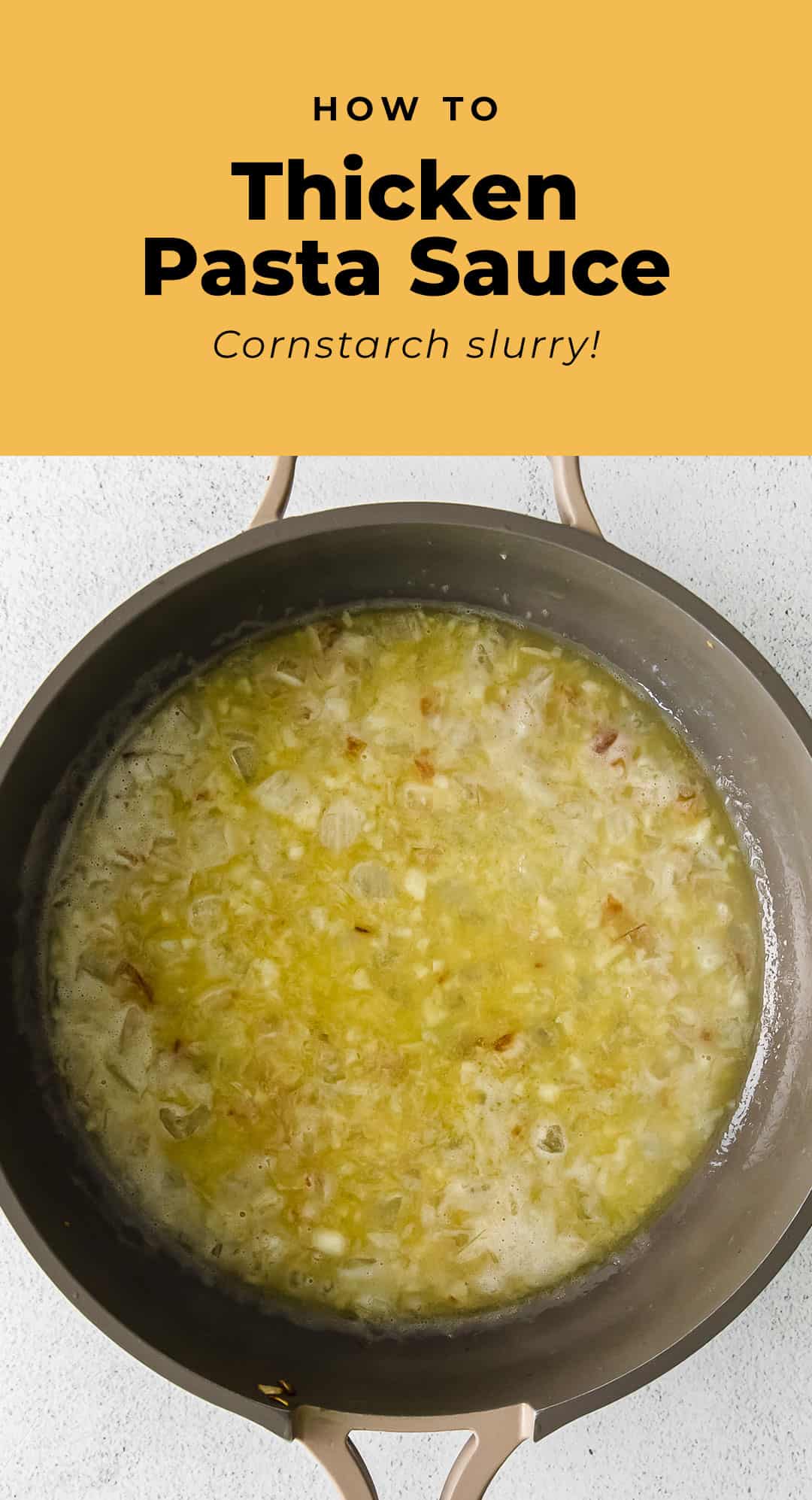
5. Use a Cornstarch Slurry for a Fast, Neutral Fix
A cornstarch slurry is my fastest neutral option when I need a little more thickness without changing a sauce’s main flavor. For about 2 cups of sauce, whisk 1 teaspoon cornstarch with 1 teaspoon cold water until completely smooth. Stream it into gently simmering sauce while stirring, then cook for 30 to 60 seconds.
Pause before adding more; cornstarch thickens quickly. Never add dry cornstarch directly to hot sauce because it will clump. The finished sauce can be slightly glossy and less traditional in texture, and cornstarch can lose some power if held hot for a long time. When I have time to build deeper flavor, I choose reduction instead.
6. Add Cheese or Dairy for a Richer, Better-Clinging Sauce
Cheese and dairy add body, but they are not neutral thickeners—they deliberately change a sauce’s flavor and richness. I use finely grated Parmesan for a savory, better-clinging finish; cream cheese or mascarpone for mild, velvety richness; and heavy cream when I want to take a tomato sauce in a creamier direction. For 2 cups of hot sauce, start with ¼ cup finely grated Parmesan, 1 to 2 tablespoons cream cheese or mascarpone, or a small splash of cream.
| Choose this | Best effect | How I use it |
|---|---|---|
| Parmesan | Savory body and cling | Stir finely grated cheese into hot, non-boiling sauce. |
| Cream cheese | Mild creaminess | Whisk in small pieces for a smooth, richer sauce. |
| Mascarpone | Silky texture | Fold in gently for a luxurious, less tangy finish. |
Take a delicate cheese sauce off aggressive heat before adding cheese, and use freshly grated hard cheese when possible—pre-shredded cheese often contains anti-caking ingredients that can make the texture less smooth. Taste before adding salt. For a full application, try this easy cream cheese pasta sauce.
Methods to Avoid (or Use Carefully)
- Dry flour or cornstarch in hot sauce: Both clump. Make a roux or a cold slurry instead.
- More pasta water in a deeply watery sauce: It can help emulsify a nearly finished sauce, but it will not replace reduction.
- Hard boiling cream or cheese sauce: Aggressive heat can split it or make it grainy.
- Bread crumbs, mashed potatoes, or similar add-ins: They change flavor and texture, so I use them only when that is the result I actually want.
For an optional plant-forward thickener, blend a small amount of cooked white beans into the sauce. They add fiber and protein, but they also change the color, body, and flavor, so this is a purposeful choice rather than a universal rescue.
Troubleshooting Thin Pasta Sauce
Use these targeted fixes when you need to fix watery pasta sauce without creating a new problem.
My sauce is still watery after simmering
Surface area, lid use, batch size, and watery vegetables or tomatoes all affect reduction. Move the sauce to a wider pan, uncover it, and keep it at a gentle simmer. Do not just turn the heat up until it scorches.
I added too much cornstarch
Loosen a gummy sauce gradually with a compatible liquid, such as additional tomato sauce, stock, milk, or cream depending on the sauce. Add a little at a time, heat gently, and taste again before adjusting seasoning. Plain water usually weakens the flavor.
My cheese sauce is grainy or split
Too much heat and unsuitable or pre-shredded cheese are common culprits. Take the pan off the heat, whisk gently, and add a small splash of warm milk or cream if it fits the sauce. Avoid boiling it again; a roux-based cheese sauce for mac and cheese is a useful stable starting point next time.
My sauce is thick but does not cling to pasta
Thickness and emulsion are different. Toss the pasta directly in the sauce over gentle heat with a small splash of reserved pasta water until the sauce turns glossy and grips the noodles.
FAQs
For most tomato-based pasta sauces, simmer the sauce uncovered in a wide pan so excess water evaporates. This thickens it without adding another ingredient and concentrates flavor. If time is short, tomato paste adds body quickly; for cream and cheese sauces, a roux or the right cheese finish is usually a better fit.
Stir in a small amount of tomato paste and let the sauce simmer for a few minutes, tasting before adding more. A cornstarch slurry can also thicken sauce quickly, but add it gradually because it works fast and can make the texture glossy. Do not add dry flour or cornstarch directly to hot sauce.
Starchy pasta water helps sauce emulsify and cling to noodles, especially when pasta is finished in the sauce over heat. It works best when the sauce is already close to the desired consistency. A large amount of pasta water will not replace reducing a very thin sauce first.
Yes, but flour works best when cooked first with fat to make a roux. The roux gives creamy and cheese sauces a stable, velvety texture and avoids a raw-flour taste. For a light tomato sauce, reducing or using tomato paste often preserves the flavor and texture better.
Finely grated Parmesan, cream cheese, mascarpone, and heavy cream can add body and make sauce cling better, but they also change flavor and richness. Add cheese over gentle heat or off the heat to reduce graininess, and taste before adding salt because hard cheeses are naturally salty.
Pasta sauce can be watery when tomatoes or vegetables release a lot of liquid, when it has not simmered long enough uncovered, or when pasta water is added without enough time to finish the sauce and pasta together. Reduce tomato sauces, use a roux for creamy sauces, and use starchy pasta water to help a nearly finished sauce cling to noodles.